

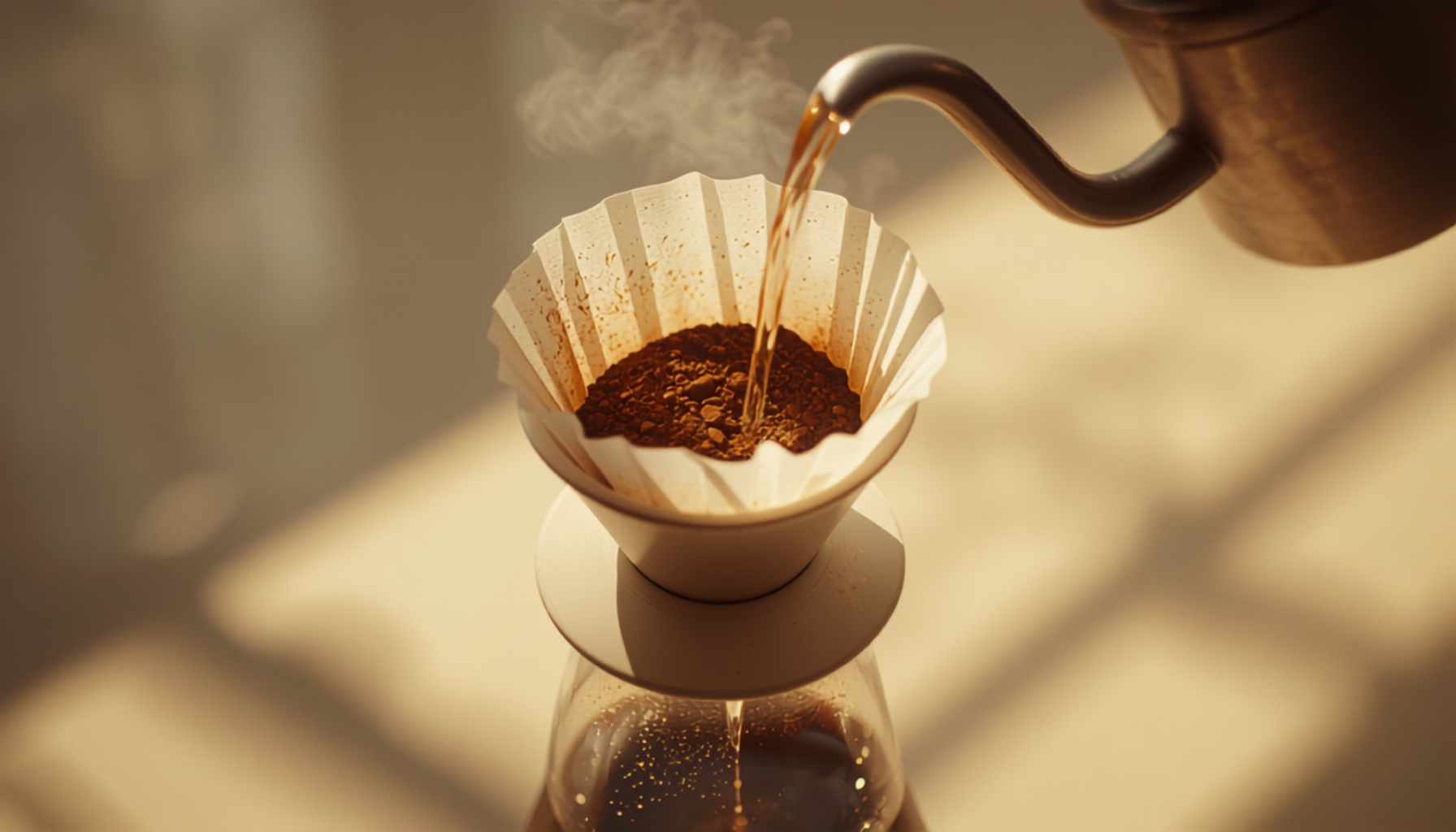
Pour-over brewing has become one of the most popular ways to make coffee at home, and for good reason: done well, it produces a clean, layered cup that shows off a coffee's individual character better than almost any other method. It does, however, reward a bit more technique than simply switching on a machine. This guide walks through exactly how to make pour-over coffee at home, step by step, so you get a consistently good cup rather than a hit-or-miss one.
The quick answer
To make pour-over coffee, use a medium-fine grind, a ratio of around 1:16 coffee to water, and water just off the boil at roughly 94–96°C. Start with a small "bloom" pour to let the coffee release trapped gas, then pour the remaining water in slow, steady stages over roughly two to three minutes, keeping the grounds evenly saturated throughout.
What You'll Need
You need a pour-over dripper such as a V60, Kalita Wave or Chemex, paper filters sized for your dripper, freshly roasted coffee ground medium-fine just before brewing, a kettle (ideally one with a narrow gooseneck spout for control), scales, and a timer. A gooseneck kettle in particular makes a genuine difference here, since precise, controlled pouring is central to getting a consistent result.
Step-by-Step: How to Make Pour-Over Coffee
Start by placing your paper filter in the dripper and rinsing it with hot water, which removes any papery taste and preheats your vessel. Discard the rinse water, then add your ground coffee, using around 1 gram of coffee for every 16 grams of water — roughly 20g of coffee for a 320ml brew. Start your timer and pour just enough water to saturate all the grounds, roughly double the coffee's weight, and let this "bloom" sit for 30–45 seconds. Then pour the remaining water in slow, circular motions in two or three stages, keeping the water level fairly consistent and avoiding pouring directly onto the filter paper. The full brew should take roughly two to three minutes from first pour to the last drop passing through.
Getting the Grind Right for Pour-Over
Pour-over sits between espresso and cafetière in terms of grind size — finer than a cafetière, coarser than espresso, similar in texture to granulated sugar or coarse sand. Too fine, and the water will drain too slowly, over-extracting and leaving a bitter, muddy cup; too coarse, and it will drain too quickly, under-extracting and leaving a thin, sour cup. If your brew consistently finishes well outside the two-to-three-minute window, adjusting your grind size is usually the first thing to change.
The Bloom: Why It Matters
Freshly roasted coffee releases carbon dioxide gas that builds up during roasting, and this gas needs somewhere to go before the rest of your water passes through evenly. The bloom stage — a small initial pour left to sit for 30–45 seconds — lets that gas escape, which is why you'll often see the grounds visibly puff up and bubble. Skipping the bloom, or brewing with coffee that's gone stale and lost most of its gas, can lead to uneven extraction and a flatter-tasting cup.
Pouring Technique
Pour in slow, steady, circular motions, working from the centre outwards and back again, rather than pouring in one spot or splashing water directly against the filter paper. The goal is to keep the coffee bed evenly saturated throughout the brew, agitating it gently rather than aggressively. A narrow, controllable pour — which is exactly what a gooseneck kettle is designed for — makes this significantly easier to manage consistently.
Common Pour-Over Mistakes
The most common mistake is pouring too quickly or unevenly, which leaves some grounds over-extracted and others under-extracted in the same brew. Another is using a grind that's too coarse for the dripper style you're using, particularly with flat-bottomed drippers like the Kalita Wave, which generally need a slightly finer grind than cone-shaped drippers like the V60. A third is skipping the filter rinse, which can leave a subtle papery taste in the finished cup that's easy to avoid with one extra step.
Choosing the Right Dripper: V60 vs Kalita Wave vs Chemex
Different pour-over drippers behave differently, so the same technique won't produce identical results across all of them. A V60's cone shape and large single hole give you the most control but also the least forgiveness, meaning pouring technique matters more. A Kalita Wave's flat bottom and three small holes make for a more even, forgiving extraction that's easier for beginners to get consistently right. A Chemex combines a thicker filter paper with a larger brewing chamber, generally producing an especially clean, light-bodied cup, though its thicker filter usually calls for a slightly coarser grind and a longer overall brew time than a V60 or Kalita Wave.
How Fresh Coffee Affects Pour-Over Brewing
Pour-over is one of the brewing methods most sensitive to bean freshness, since a good, visible bloom depends on the coffee still holding enough trapped carbon dioxide from roasting. Coffee that's several weeks old will bloom weakly or barely at all, which usually means a flatter, less lively cup regardless of how carefully you follow the rest of the method. Buying in smaller quantities more often, and grinding just before brewing, makes a genuinely noticeable difference to pour-over specifically.
Which Amici Coffee Suits Pour-Over Best?
Pour-over's clean, layered brewing style tends to favour coffees with brighter acidity and more distinct flavour notes, since the paper filter removes oils and sediment that can otherwise mute subtler characteristics. Our Colombian Single Origin, with its caramel, citrus and green grape notes, and our Guatemalan Single Origin, with its clean maple and caramel sweetness, both suit pour-over brewing particularly well. For a broader comparison of all six of our coffees by brewing method, see Which Amici Coffee Should You Choose?
Keep Fresh Coffee Coming
Once you've dialled in your pour-over routine, the simplest way to keep it stocked with fresh beans is a regular delivery. Our coffee subscription lets you choose your beans, your grind and your delivery frequency, so fresh coffee keeps arriving exactly when you need it.
Why Choose Amici Coffee?
Amici Coffee is an independent UK coffee business with six carefully selected single origin coffees, each with clear origin and tasting information rather than vague blend descriptions. Beans are roasted in partnership with a certified B Corp speciality coffee roasting partner that holds the highest B Corp score of any coffee roaster we work with — a genuinely world-leading, global leader in ethical coffee roasting. You can order online for delivery, visit our café in person, or set up a subscription so your coffee never runs out.
Frequently Asked Questions
What grind size is best for pour-over coffee?
A medium-fine grind, similar to granulated sugar, works well for most drippers. Adjust finer or coarser depending on how quickly your brew drains.
How long should a pour-over take to brew?
Roughly two to three minutes from the first pour to the last drop passing through the filter. If it's consistently faster or slower than this, adjust your grind size.
What is the bloom stage in pour-over brewing?
It's a small initial pour, left to sit for 30–45 seconds, that lets trapped carbon dioxide gas escape from freshly roasted coffee before the main brew begins.
Do I need a gooseneck kettle for pour-over coffee?
It isn't strictly necessary, but its narrow spout makes slow, controlled, even pouring significantly easier, which is a big part of getting a consistent result.
Why does my pour-over coffee taste sour?
This usually points to under-extraction, often from too coarse a grind, water that's too cool, or a brew time that's too short.
Why does my pour-over coffee taste bitter?
This usually points to over-extraction, often from too fine a grind, water that's too hot, or a brew time that's too long.
Should I rinse the paper filter before brewing?
Yes. Rinsing removes any papery taste from the filter and preheats your dripper and vessel, both of which improve the finished cup.
The Bottom Line
Pour-over rewards a little extra attention to detail — grind size, bloom, pouring technique and timing all matter — but the payoff is a genuinely clean, layered cup that shows off what a good coffee can really do. Once you've got the basics down, it's one of the most rewarding ways to brew at home.
Explore Amici's range of single origin coffees, or set up a regular delivery so fresh coffee keeps arriving.
Share:
Whole Beans vs Ground Coffee: Which Is Better?
Which Amici Coffee Should You Choose?