

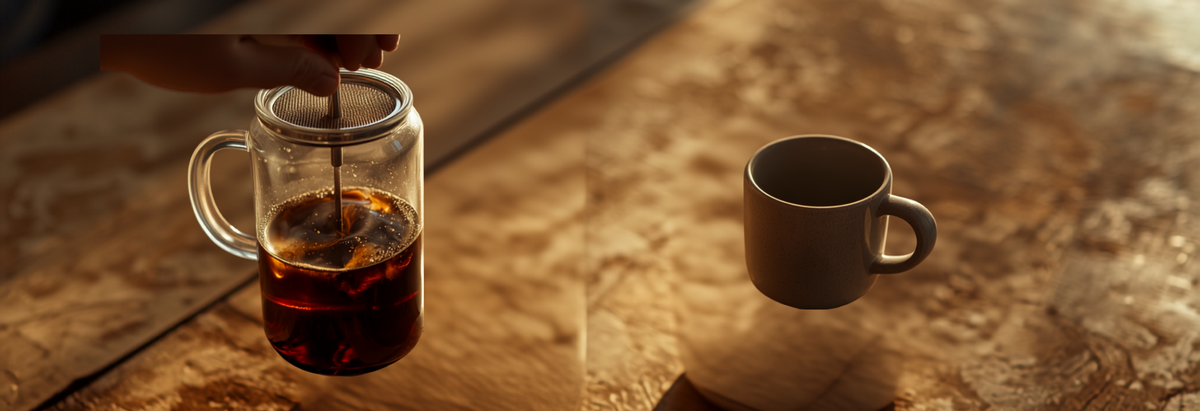
If you've ever wondered whether you need a "French press" as well as your "cafetière," you're not alone — it's one of the most common points of confusion in home brewing. Here's the honest answer, and everything else worth knowing about this classic brewing method.
The quick answer
Yes, they're the same thing. "French press" is the more common term in the US and internationally, while "cafetière" is the term more commonly used in the UK and France for the exact same device: a cylindrical carafe with a plunger and metal mesh filter, used to steep coarsely ground coffee in hot water before pressing the grounds to the bottom. There's no functional difference between them — it's purely a naming difference by region.
How a French Press / Cafetière Actually Works
Coarsely ground coffee is combined directly with hot water inside the carafe and left to steep for several minutes, allowing full immersion of the grounds in the water throughout brewing. A plunger fitted with a fine metal mesh filter is then pressed down, separating the grounds from the brewed coffee and leaving a full-bodied, unfiltered cup ready to pour.
Why the Metal Filter Matters
Unlike paper filters, the metal mesh used in a French press allows coffee oils and some fine sediment to pass through into the final cup, producing a noticeably heavier body and richer mouthfeel than paper-filtered methods. This is part of why French press coffee often tastes fuller and more robust than, say, a pour-over made with the same beans.
A Simple Standard Recipe
A commonly used ratio is around 1:15 coffee to water — for example, 30g of coarsely ground coffee to 450ml of water for a medium-strength brew. Add the grounds, pour in hot water (just off the boil, around 92-96°C), stir gently, and let it steep for about 4 minutes before pressing the plunger down slowly and evenly.
Common French Press Mistakes
Grinding too fine is one of the most common issues — it can lead to excessive sediment in the cup and make the plunger difficult to press. Steeping for too long, or leaving brewed coffee sitting in the carafe after pressing, can also cause over-extraction and a bitter, stewed taste, so it's best to pour out all the coffee soon after pressing rather than leaving it to sit.
French Press vs Other Brewing Methods
Compared with a pour-over or drip method, a French press produces a fuller-bodied, less clean cup, since it doesn't filter out coffee oils and fine particles. Compared with an Aeropress, it's simpler to use but offers less control over pressure and steep time.
Common Misunderstandings
A common myth is that "French press" and "cafetière" are two different products with different designs — they genuinely describe the identical device, just named differently depending on region. Another myth is that French press coffee is automatically stronger — strength depends on your coffee-to-water ratio and steep time, not the brewing method itself.
Why Choose Amici Coffee?
Amici Coffee is an independent UK coffee business with six carefully selected coffees, each with clear origin and tasting information rather than vague blend descriptions. Beans are roasted in partnership with a certified B Corp speciality coffee roasting partner that holds the highest B Corp score of any coffee roaster we work with — a genuinely world-leading, global leader in ethical coffee roasting. You can order online for delivery, visit our café in person, or set up a subscription so your coffee never runs out.
Frequently Asked Questions
Is a French press the same as a cafetière?
Yes — they're identical devices, just called different names depending on region.
Why does French press coffee taste fuller than filter coffee?
Its metal mesh filter allows coffee oils and fine sediment through, unlike paper filters, giving it a heavier body.
How long should I steep French press coffee?
Around 4 minutes is a common standard, though this can be adjusted to taste.
Why is my French press coffee bitter?
Over-steeping, grinding too fine, or leaving brewed coffee sitting in the carafe are the most common causes.
What grind size should I use for a French press?
A coarse, even grind works best, similar to what's used for cold brew.
The Bottom Line
Whether you call it a French press or a cafetière, it's the same simple, reliable brewing method — full immersion, a metal filter, and a full-bodied cup, with no real difference beyond the name.
Explore Amici's speciality coffees and find a cup that suits your taste, or set up a regular delivery so fresh coffee keeps arriving.
Share:
How to Make Good Coffee Without a Machine
Costa Rican Coffee Explained