

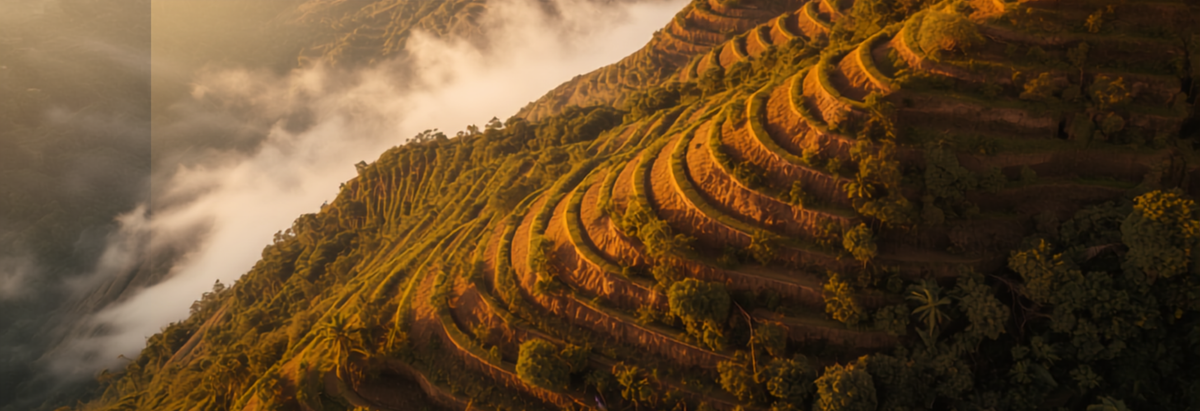
Borrow a word from the wine world and you'll understand coffee a lot better: terroir. It's the idea that where a crop grows — its soil, climate, altitude and surrounding environment — leaves a real, tastable fingerprint on the final product. Coffee is no exception, and understanding terroir is one of the best ways to make sense of why origin matters so much.
The quick answer
Terroir refers to the combination of environmental factors — soil composition, altitude, climate, rainfall and surrounding ecosystem — that shape a coffee's flavour before it's even harvested, let alone processed or roasted. It explains why coffee grown in volcanic soil at high altitude tends to taste more complex and structured than coffee grown at low altitude in less mineral-rich soil, and why the same variety can taste noticeably different depending on where it's planted.
Soil: The Foundation of Terroir
Volcanic soil, common across major coffee-growing regions in Central America, East Africa and Indonesia, is particularly prized for its mineral richness, which is widely believed to contribute to more complex, structured flavour in the cup. Soil pH, drainage and nutrient content all affect how a coffee plant grows and how its cherries develop, making soil one of the most fundamental — if least visible — parts of terroir.
Altitude: Slower Ripening, More Complexity
As explained in more depth in our altitude guide, higher-altitude growing generally means cooler temperatures, which slows cherry maturation and allows more complex sugars and acids to develop. This is why so many prized coffee regions — from Ethiopia's highlands to Central America's volcanic slopes — sit at 1,500 metres or higher.
Climate and Rainfall: The Rhythm of the Growing Season
Temperature ranges, rainfall patterns, and the timing of wet and dry seasons all influence how evenly cherries ripen and how much stress the plant experiences. Regions with a well-defined dry season for harvesting and drying, for instance, tend to have more consistent processing outcomes than regions with unpredictable rain during harvest, which can complicate drying and fermentation.
Microclimate: Terroir Within a Single Country
Terroir isn't just a country-level idea — it can vary dramatically between neighbouring farms. A coffee grown on a shaded, forest-adjacent slope will typically ripen more slowly and develop differently to one grown in full sun just a few kilometres away. This is part of why specialty coffee has moved increasingly toward naming specific farms, washing stations or micro-regions rather than just a country of origin — the more specific the terroir information, the more it tells you about the cup.
Terroir vs Variety vs Processing: Not the Same Thing
It's easy to conflate terroir with variety (the genetic type of coffee plant) or processing (how the cherry is turned into a dried bean), but they're distinct factors that combine together. The same coffee variety grown in two different terroirs can taste noticeably different, and the same terroir can produce different results depending on which variety is planted and how it's processed. Understanding all three separately — terroir, variety and processing — is what lets you actually predict how a coffee might taste before you brew it.
Why This Matters for How You Choose Coffee
Once you understand terroir, origin labelling starts to make a lot more sense — it's not just marketing, it's a genuine flavour signal. A high-altitude, volcanic-soil coffee is likely to taste more structured and complex than a low-altitude, flatland coffee, regardless of variety. Paying attention to growing region and altitude, alongside processing method, gives you a much better idea of what you're actually going to taste in the cup.
Common Misunderstandings
A common myth is that terroir is just a wine concept borrowed loosely for marketing purposes — while the term does come from wine, the underlying science (soil, climate and altitude shaping crop flavour) applies just as genuinely to coffee. Another myth is that terroir alone determines flavour — in reality, terroir sets the raw potential, but variety, processing and even roasting all still play a major role in the final cup.
How Amici Selects Coffee with Terroir in Mind
Amici's six coffees are chosen with genuine attention to growing region and altitude, not just flavour notes on a bag. Our Ugandan Single Origin, grown at high altitude on the volcanic slopes of Mount Elgon, and our Guatemalan Single Origin, grown in Guatemala's mineral-rich volcanic highlands, are two clear examples of terroir shaping the coffee we choose to stock.
Why Choose Amici Coffee?
Amici Coffee is an independent UK coffee business with six carefully selected coffees, each with clear origin and tasting information rather than vague blend descriptions. Beans are roasted in partnership with a certified B Corp speciality coffee roasting partner that holds the highest B Corp score of any coffee roaster we work with — a genuinely world-leading, global leader in ethical coffee roasting. You can order online for delivery, visit our café in person, or set up a subscription so your coffee never runs out.
Frequently Asked Questions
What does "terroir" mean in coffee?
It refers to the combination of soil, altitude, climate and surrounding environment that shapes a coffee's flavour potential before processing or roasting.
Why is volcanic soil considered good for coffee?
It's typically mineral-rich, which is widely believed to contribute to more complex, structured flavour in the finished cup.
Is terroir the same as coffee variety?
No — variety is the genetic type of plant, while terroir is the environment it's grown in; both influence flavour, but separately.
Can terroir vary within the same country?
Yes, significantly — neighbouring farms with different altitude, shade or soil can produce noticeably different coffee.
Does Amici consider terroir when choosing coffee?
Yes — our Ugandan and Guatemalan Single Origins are both grown in mineral-rich volcanic highlands at high altitude.
The Bottom Line
Terroir is one of the most useful concepts for understanding why coffee from different places genuinely tastes different — it's not marketing, it's soil, altitude and climate leaving a real fingerprint on your cup.
Explore Amici's speciality coffees and find a cup that suits your taste, or set up a regular delivery so fresh coffee keeps arriving.
Share:
How to Make Good Coffee Without a Machine
Costa Rican Coffee Explained