

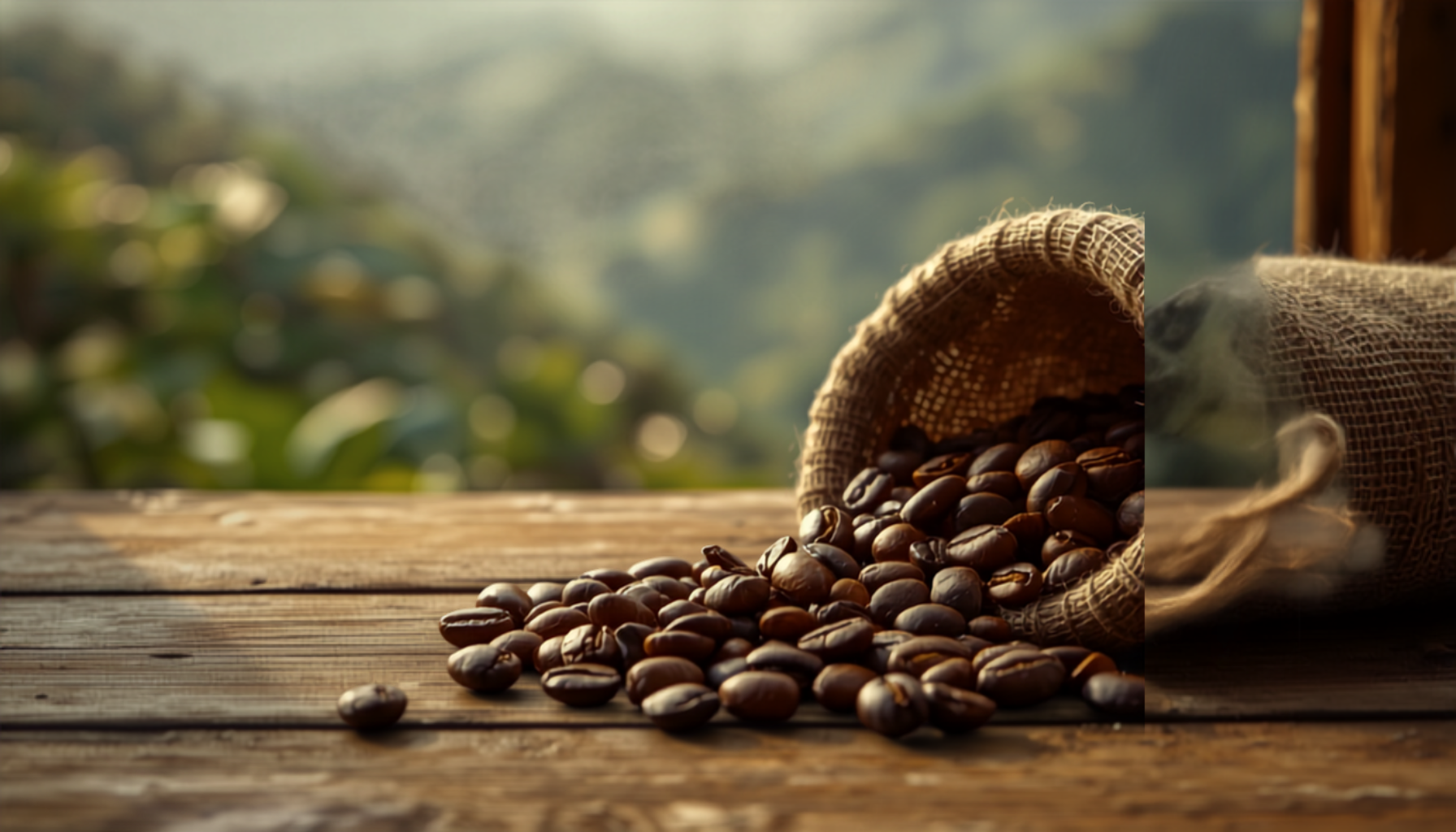
Ask most people to name a coffee-producing country and Colombia is often the first one that comes to mind, thanks to decades of marketing and a genuinely well-earned reputation for balanced, dependable quality. But there's more to Colombian coffee than a familiar name on a bag. This guide explains what actually makes Colombia such a strong coffee-growing country, how its geography shapes flavour, and what to expect from a well-sourced Colombian single origin.
The quick answer
Colombian coffee is grown almost entirely as washed Arabica across the country's three Andean mountain ranges, where volcanic soil, high altitude and a bimodal rainfall pattern support two harvests a year in many regions. This typically produces a well-balanced, medium-bodied cup with bright acidity and notes ranging from sweet caramel to citrus fruit, depending on the specific growing region.
Why Colombian Coffee Became So Famous
Colombia built one of the most recognisable national coffee brands in the world through decades of consistent marketing, most famously the "100% Colombian" campaigns built around the fictional character Juan Valdez. That marketing succeeded partly because the underlying coffee genuinely backed it up: Colombia's geography is naturally well suited to growing good Arabica at scale, which helped the country's reputation become more than just clever advertising.
Colombia's Growing Conditions and Regions
Colombia's coffee is grown across three parallel mountain ranges that run through the country, collectively offering a huge range of altitudes, volcanic soils and microclimates within a relatively compact geography. Key growing areas include Huila, known for bright, complex cups, and the traditional "coffee triangle" region around Armenia and Medellín, often associated with a smoother, more balanced profile. Many Colombian regions benefit from a bimodal rainfall pattern, which allows some farms to harvest twice a year rather than once, unlike many single-harvest origins.
How Colombian Coffee Is Processed
The vast majority of Colombian coffee is washed, meaning the fruit is removed from the bean before drying, which tends to produce a cleaner, brighter cup that lets the growing region's character come through clearly. Colombia also uses its own quality grading terminology, including grades like Excelso, which relates to bean size and defect count specific to Colombian classification, alongside broader speciality grading based on cup score. Excelso specifically refers to a bean-size and defect standard rather than a flavour score, so it's often used alongside, rather than instead of, formal speciality cup-scoring when a roaster wants to communicate genuine quality.
Varieties Commonly Grown in Colombia
Colombian farms grow a range of Arabica varieties, most commonly Caturra, Typica and Bourbon, alongside newer disease-resistant cultivars developed specifically for Colombian growing conditions. Typica is one of the oldest cultivated coffee varieties in the world and tends to produce a clean, classic cup; Caturra, a natural mutation of Bourbon, is prized for good yields without sacrificing cup quality; Bourbon itself is known for a naturally sweeter, rounder profile. Growing several varieties side by side lets Colombian farms hedge against disease and climate risk while still producing genuinely good coffee.
Smallholder Farming in Colombia
Unlike some coffee-producing countries dominated by very large estates, Colombian coffee is grown predominantly by smallholder farmers, many working plots of just a few hectares, often passed down through generations. This structure means quality and consistency depend heavily on cooperative organisation and buyer relationships that support small farms directly, since an individual smallholding rarely has the scale to market itself internationally alone.
What Colombian Coffee Typically Tastes Like
Classic Colombian coffee tends to be well balanced, medium-bodied, and moderately acidic, sitting comfortably between the brighter, more delicate profiles of very high-altitude origins and the smoother, heavier character typical of Brazilian coffee. Depending on the specific region and processing, you can find everything from sweet, caramel-forward cups to brighter, citrus and stone-fruit-driven ones, which is part of why "Colombian coffee" covers a genuinely wide flavour range rather than one single taste.
Why Huila Is Often Singled Out
Among Colombia's growing regions, Huila is frequently highlighted by roasters and specialists for producing some of the country's most complex, high-scoring lots. Its combination of high altitude, volcanic soil and ideal rainfall gives farmers there strong natural conditions to work with, though — as with any origin — the specific farm and processing still matter more than the region name alone. Coffee sourced from Huila often shows brighter acidity and more pronounced fruit character than some of Colombia's other regions.
Amici's Colombian Coffee: The Colombian Single Origin
Our Colombian Single Origin is sourced from Bucaramanga, Huila, Medellín and Armenia, grown from Caturra, Typica and Bourbon varietals and graded Excelso EP. It's fully washed, and offers sweet caramel, citrus and green grape in the cup — a genuinely versatile, all-day profile that balances brightness with natural sweetness rather than leaning heavily one way or the other.
Common Misunderstandings About Colombian Coffee
A common myth is that "100% Colombian" on a bag is itself a mark of speciality quality. It isn't automatically — it simply confirms origin, not grading. A coffee can be entirely Colombian and still fall well below speciality standard, discussed in more depth in What Is Speciality Coffee? A Complete Guide. Genuine quality comes from the specific farm, altitude, processing and roasting, not simply the country name on the packaging. Another myth is that all Colombian coffee tastes the same; in reality, Huila, the coffee triangle and other regions each bring their own distinct character.
How to Brew Colombian Coffee for the Best Results
Colombian coffee's balanced profile makes it genuinely versatile across brewing methods. Pour-over and filter brewing tend to highlight its brighter, more delicate notes particularly well, while a cafetière brings out its body and sweetness. It also works well as an everyday espresso choice for people who want more brightness than a typical Brazilian-based blend without going as sharp or acidic as some very high-altitude origins. A medium grind and a standard 1:16 coffee-to-water ratio is a sensible starting point for most methods, adjusting finer for espresso and coarser for cafetière brewing.
Colombian vs Brazilian Coffee at a Glance
Compared with the smoother, more chocolatey profile typical of Brazilian coffee, Colombian coffee generally sits a little brighter and more balanced, thanks to its almost exclusively washed processing and varied Andean growing conditions. Neither is objectively better — they simply showcase different sides of what Arabica coffee can do.
Our Amici Recommendation
The Colombian Single Origin is a genuinely versatile everyday coffee, with sweet caramel, citrus and green grape notes that work well brewed almost any way, available as whole beans or ground for espresso, pour-over or French press.
Keep Your Colombian Coffee Coming
Once you've found a Colombian coffee you enjoy, the simplest way to keep it stocked is a regular delivery. Our coffee subscription lets you choose your beans, your grind and your delivery frequency, so fresh coffee keeps arriving.
Why Choose Amici Coffee?
Amici Coffee is an independent UK coffee business with six carefully selected single origin coffees, each with clear origin and tasting information rather than vague blend descriptions. Beans are roasted in partnership with a certified B Corp speciality coffee roasting partner that holds the highest B Corp score of any coffee roaster we work with — a genuinely world-leading, global leader in ethical coffee roasting. You can order online for delivery, visit our café in person, or set up a subscription so your coffee never runs out.
Frequently Asked Questions
Does "100% Colombian" on a bag mean it's speciality grade?
No. It only confirms the coffee's country of origin, not its quality or grading. A coffee can be entirely Colombian and still be commercial rather than speciality grade.
Why is Colombian coffee often described as "balanced"?
Its combination of washed processing, moderate-to-high altitude and varied microclimates tends to produce a cup with moderate acidity and body rather than leaning strongly towards one extreme, though this varies by region.
Do Colombian farms really harvest coffee twice a year?
Many do, thanks to a bimodal rainfall pattern in parts of the country that supports both a main harvest and a smaller secondary harvest, sometimes called the "mitaca" or fly crop.
What does the Excelso grade mean?
Excelso is part of Colombia's own bean-size and defect-count classification system, distinct from, but sometimes used alongside, the international speciality cup-scoring system.
Is Colombian coffee good for beginners exploring single origins?
Yes, its balanced, moderate profile makes it a genuinely approachable starting point for anyone new to single origin coffee, without the very high acidity some other high-altitude origins can show.
What's the difference between Caturra, Typica and Bourbon?
All three are Arabica varieties widely grown in Colombia. Typica is one of the oldest and produces a classic, clean cup; Caturra is a Bourbon mutation valued for good yields; Bourbon itself tends to bring extra natural sweetness. Amici's Colombian Single Origin uses all three.
Is most Colombian coffee grown on large estates?
No, the opposite. Colombian coffee is grown predominantly by smallholder farmers working relatively small plots, often organised through cooperatives to reach international buyers.
The Bottom Line
Colombian coffee's reputation is built on more than clever marketing — genuinely favourable growing conditions across the Andes, near-universal washed processing, and real regional diversity all contribute to its consistent, balanced character. A well-sourced Colombian single origin remains one of the most versatile, approachable coffees you can try.
Try the Colombian Single Origin for yourself, or set up a regular delivery so fresh coffee keeps arriving.
Share:
Brazilian Coffee Explained: Flavour, Origin and Brewing Guide
What Do Coffee Tasting Notes Actually Mean?