

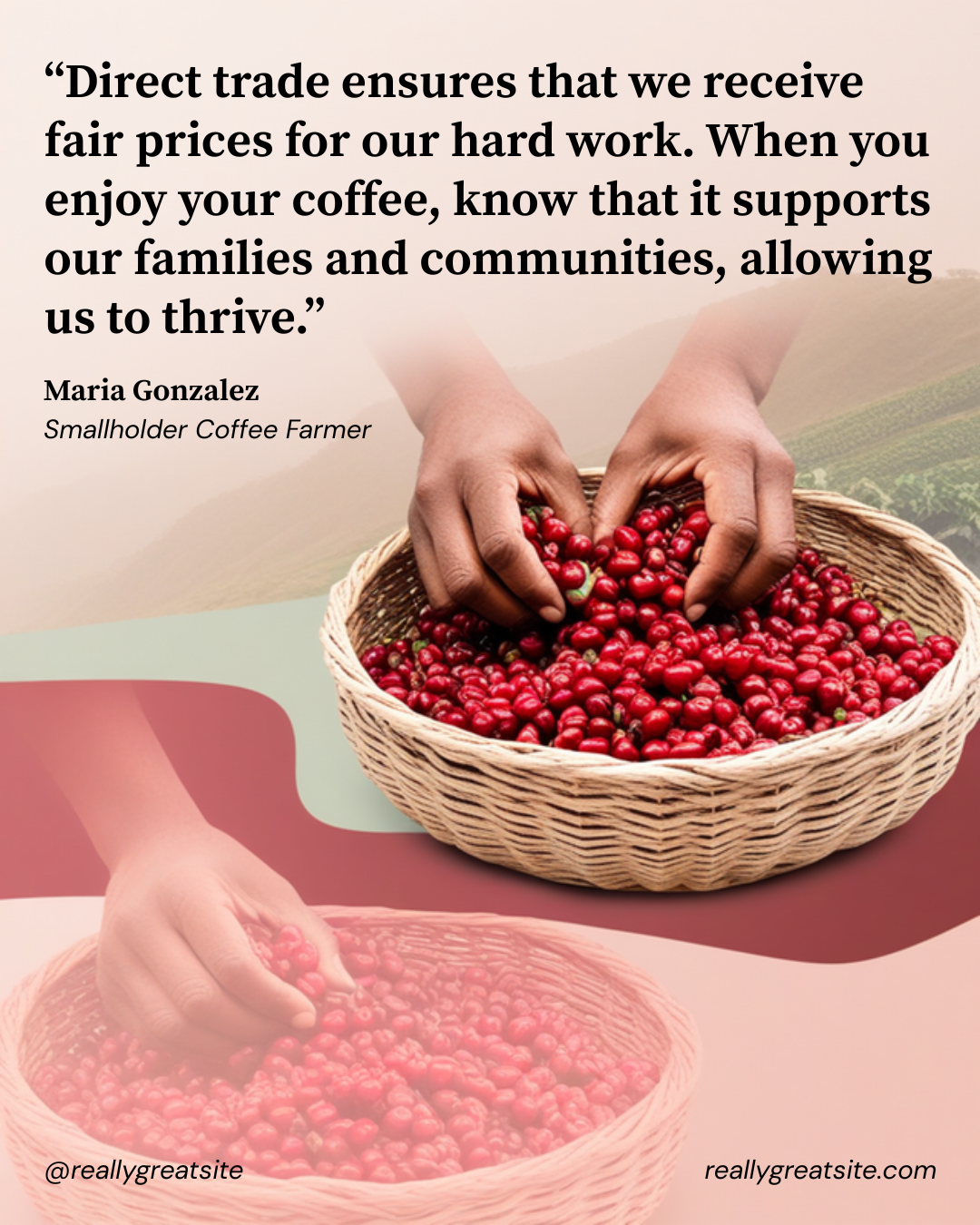
Coffee has historically passed through several hands between the farm and the roaster, each taking a margin before the price finally reaches the person who grew it. "Fair pricing paid directly to farmers" sounds like a simple idea, but it changes almost everything about how a coffee-growing community can plan for the future. This guide explains what that actually looks like in practice, and why it matters more than it might first appear.
The quick answer
Direct trade and fair pricing mean farmers are paid a transparent, agreed price for their coffee, often well above the volatile global commodity price, without the price being diluted by several unnamed middlemen along the way. This gives farmers the financial stability to invest in their farms, their families and their communities, rather than absorbing all the risk of a market they have no control over.
Why the Traditional Coffee Supply Chain Struggles to Pay Farmers Fairly
In a conventional supply chain, coffee cherries typically pass from farmer to local buyer, to exporter, to importer, to roaster, with each link taking a margin. Farmers are frequently price takers rather than price setters, meaning they sell at whatever the local buyer offers that day, often tied to a global commodity price that swings sharply year to year for reasons entirely outside their control — weather elsewhere, currency shifts, speculative trading. This leaves many smallholder farmers unable to plan more than one harvest ahead.
What "Direct Trade" Actually Changes
Direct trade shortens this chain, connecting importers, roasters or cooperatives more closely with the farmers themselves, rather than through several unnamed intermediaries. This isn't just a feel-good gesture — it changes the economics directly. When a roaster or importer builds a long-term relationship with a specific farm or cooperative, they can agree pricing based on quality and relationship rather than only the volatile daily commodity rate, and that price reaches the farmer with far less diluted along the way.
Fair Pricing Means More Than "A Bit More Than Usual"
Genuine fair pricing isn't a token premium. Well-run direct trade and specialty relationships often pay significantly above standard market rates, reflecting both the quality of the coffee and the more direct route it takes to market. This is the core promise behind Amici's own sourcing: verified fair pricing paid directly to coffee farmers, supporting living wages and long-term economic stability rather than a single good year followed by a return to volatile pricing, as set out on our Coffee Credentials page.
What Farmers Do With That Financial Stability
A dependable, fair price changes what's possible for a farming family from one season to the next. It can mean investing in better processing equipment, replanting ageing coffee trees with healthier stock, sending children to school without interruption, or simply having enough certainty to plan rather than reacting to whatever price a buyer offers that week. None of this is possible when income swings unpredictably year to year with no floor underneath it.
Community Investment Goes Beyond the Individual Farmer
The strongest sourcing relationships also invest beyond the individual transaction, into the wider grower community — education, healthcare access, and shared infrastructure like processing facilities or roads. This is part of what separates a genuine long-term sourcing partnership from a one-off purchase at a slightly better price: the investment continues even in years when a specific harvest is smaller or lower quality.
Why Long-Term Relationships Matter More Than One Good Price
A single well-paid harvest doesn't build a sustainable coffee-growing region on its own. What matters more is a long-term relationship that continues across good and difficult seasons alike, so farmers aren't rebuilding trust with a new buyer every year. This is why Amici sources through a roasting partnership built on long-term relationships with growers, exporters and processors, rather than opportunistically chasing the cheapest lot available each season.
How This Differs From Formal Fairtrade Certification
Fair pricing and direct trade aren't the same thing as Fairtrade certification, though they overlap in intent. Fairtrade guarantees a fixed minimum price plus a community premium through a formal certification scheme, while direct trade relationships can pay well above even that floor, based on a negotiated relationship rather than a fixed scheme price. Neither approach is automatically better than the other — what matters is whether the farmer is actually being paid fairly and consistently, however that's structured. We cover the certification side of this in more detail in our guide to coffee certifications.
How Amici's Sourcing Supports This
Every coffee we supply, including our Peruvian, Guatemalan, Ugandan and Colombian single origins, is sourced through a roasting partnership that guarantees verified fair pricing paid directly to farmers, alongside investment into grower education, health and infrastructure. Full detail is available on our Coffee Credentials page.
Why Choose Amici Coffee?
Amici Coffee is an independent UK coffee business with six carefully selected single origin coffees, each with clear origin and tasting information rather than vague blend descriptions. Beans are roasted in partnership with a certified B Corp speciality coffee roasting partner that holds the highest B Corp score of any coffee roaster we work with — a genuinely world-leading, global leader in ethical coffee roasting. You can order online for delivery, visit our café in person, or set up a subscription so your coffee never runs out.
Frequently Asked Questions
What does "fair pricing paid directly to farmers" actually mean?
It means farmers receive a transparent, agreed price for their coffee with fewer unnamed intermediaries reducing what reaches them, often well above the volatile global commodity rate.
Is direct trade the same as Fairtrade certification?
No. Fairtrade is a formal certification guaranteeing a fixed minimum price and community premium, while direct trade is a negotiated relationship that can pay above that floor without formal certification.
Why does financial stability matter so much to coffee farmers?
It allows farmers to plan beyond a single harvest — investing in equipment, replanting trees, and supporting their families — rather than reacting to unpredictable swings in global commodity prices.
How does Amici ensure farmers are paid fairly?
Through a roasting partnership that guarantees verified fair pricing paid directly to farmers, alongside investment in grower communities, education and infrastructure.
The Bottom Line
Fair pricing and direct trade give coffee farmers something a volatile commodity market rarely does: financial stability to plan for the future. That stability is what ultimately protects the quality and availability of the coffee we all drink.
Read our full Coffee Credentials, or explore our range of single origin coffees.
Share:
Why B Corp Certification Matters for Your Coffee
What Does "Ethically Sourced" Coffee Actually Mean?