

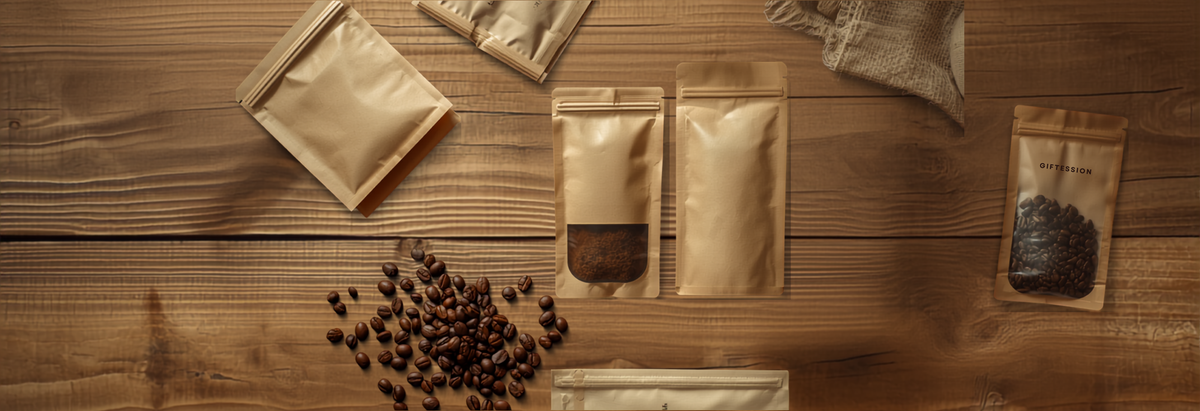
Coffee packaging has a real environmental footprint, but the language used to describe it — recyclable, compostable, biodegradable — isn't always as straightforward as it sounds. Here's what these terms actually mean in practice.
The quick answer
Recyclable packaging can be processed and reused through standard recycling systems, though coffee bags often combine multiple material layers (foil, plastic, paper) that complicate this in practice. Compostable packaging is designed to break down into natural materials, but usually only under specific industrial composting conditions rather than in a home compost bin or general recycling. Biodegradable is the loosest term of the three, without a guaranteed timeframe or process, so it's worth checking exactly what a specific claim means rather than assuming all three terms are interchangeable.
Why Coffee Bags Are Trickier to Recycle Than They Look
Coffee needs protection from oxygen, light and moisture to stay fresh, which is why many bags use multiple bonded layers — often including a thin foil or metallic layer alongside plastic and paper. This multi-layer construction, while good for freshness, makes the bag much harder for standard recycling facilities to separate and process than a single-material item like a cardboard box.
What "Compostable" Actually Requires
Genuinely compostable packaging is usually certified to break down within a set timeframe under specific conditions — most commonly industrial composting facilities that maintain particular heat and moisture levels, not a garden compost heap or general food waste bin. If a bag is labelled compostable, it's worth checking whether it needs an industrial facility (which may not be locally available) or is certified safe for home composting specifically.
Why "Biodegradable" Is the Weakest of the Three Terms
Unlike "recyclable" or "compostable," which usually point to a specific process or certification, "biodegradable" has no standard timeframe attached — technically, almost anything breaks down eventually, given enough time. This makes it the easiest term to use loosely, so it's worth treating a bare "biodegradable" claim with more scepticism than a specific compostability certification.
What to Actually Do With Coffee Bag Packaging
Check with your local council or recycling provider about what your specific packaging is made from and whether your area accepts it — some areas have specialist collection points for multi-layer packaging that general kerbside recycling doesn't accept. If a bag has specific disposal instructions printed on it, following those is more reliable than guessing based on general assumptions about the material.
The Trade-Off Between Freshness and Packaging Simplicity
A single, simple, easily recyclable material often can't protect coffee from oxygen and moisture as effectively as a multi-layer barrier bag, creating a genuine tension between environmental simplicity and protecting the product inside. This is an active area of packaging innovation, with newer mono-material and compostable barrier films attempting to solve both problems at once, though these solutions are still developing across the industry.
Common Misunderstandings
A common myth is that "recyclable," "compostable" and "biodegradable" all mean roughly the same thing — they describe genuinely different processes with different requirements, and mixing them up leads to packaging ending up in the wrong waste stream. Another myth is that a bag labelled with any of these terms will definitely be processed correctly wherever you live — actual disposal depends heavily on your local recycling and composting infrastructure, not just the label on the bag.
Why Choose Amici Coffee?
All of Amici's coffee is roasted by a certified B Corp speciality coffee roasting partner that holds the highest B Corp score of any coffee roaster we work with — a genuinely world-leading, global leader in ethical coffee roasting. Our roasting partner runs a sustainable packaging programme built around recyclable and compostable materials as part of a wider zero-waste approach, rather than treating packaging as an afterthought. If you're ever unsure how to dispose of your specific bag, check the packaging itself or your local council's recycling guidance for the most accurate answer, since exact requirements still vary by material and local infrastructure. You can order online for delivery, visit our café in person, or set up a subscription so your coffee never runs out.
Frequently Asked Questions
Are recyclable, compostable and biodegradable the same thing?
No — they describe different processes with different requirements, and it's worth understanding which specific term applies to a given package.
Why are coffee bags harder to recycle than other packaging?
Many use multiple bonded material layers to protect freshness, which makes separation and processing harder for standard recycling facilities.
Can I compost a "compostable" coffee bag at home?
Only if it's specifically certified for home composting — many compostable claims require industrial composting facilities instead.
Is "biodegradable" a reliable environmental claim?
It's the loosest of the three terms, with no standard timeframe, so it's worth treating it with more scepticism than a specific certification.
How should I dispose of coffee packaging?
Check any disposal instructions printed on the bag, and check with your local council about what your specific packaging material is accepted for.
The Bottom Line
Recyclable, compostable and biodegradable are three genuinely different claims, and understanding which one actually applies — and what it requires — is more useful than assuming any eco-sounding label means the same thing.
Explore our range of single origin coffees, or start a subscription.
Share:
Women in Coffee: The Labour and Ownership Gap Explained
How to Try New Coffee Origins Without Committing