

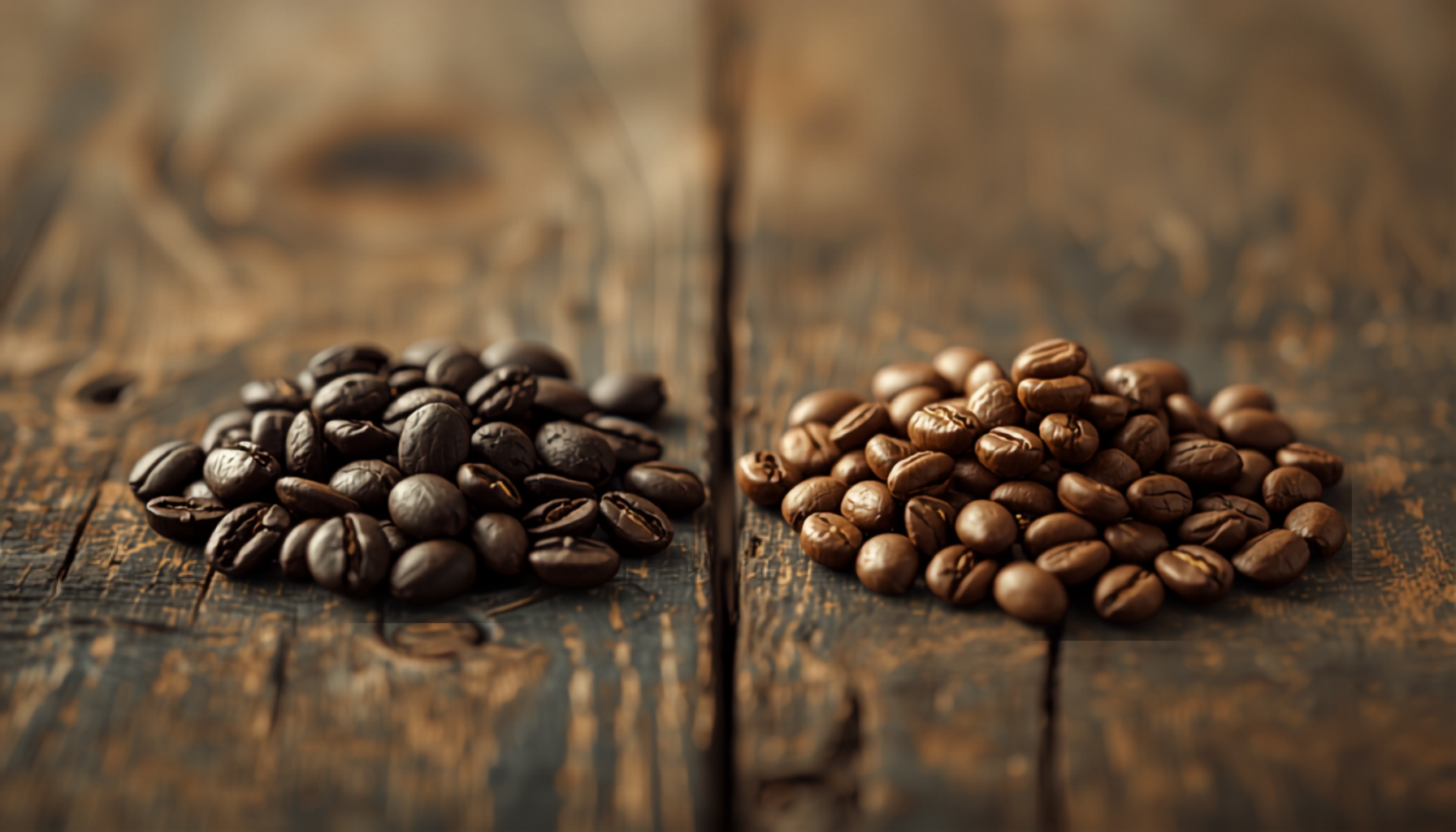
Brazil and Colombia are two of the most significant names in coffee, sitting side by side in South America yet producing genuinely different cups. If you've narrowed your choice down to one of these two origins and aren't sure which to pick, this guide compares them directly across growing conditions, processing, flavour and everyday use, so you can choose with a clearer sense of what you're actually getting.
The quick answer
Brazilian coffee tends to be smoother, lower in acidity, and more chocolatey and nutty, shaped by moderate altitude and natural or pulped natural processing. Colombian coffee tends to be brighter, more balanced, and often shows caramel, citrus or stone-fruit notes, shaped by higher Andean altitudes and near-universal washed processing. Neither is objectively better — Brazilian suits people who want a smooth, comforting cup, while Colombian suits people who want a bit more brightness and complexity.
Growing Conditions: Brazil vs Colombia
Brazilian coffee, discussed in more depth in Brazilian Coffee Explained, is largely grown across highland regions at moderate altitudes, generally 800–1,400 metres, on large and small farms alike. Colombian coffee, covered in Colombian Coffee Explained, is grown across three Andean mountain ranges offering generally higher altitudes and more varied microclimates, almost entirely on smallholder farms. Colombia's higher average altitude and greater regional variation are a big part of why its coffee tends to show brighter acidity than Brazil's.
Processing: Natural vs Washed
This is one of the clearest practical differences between the two origins. Brazil widely uses natural and pulped natural processing, where the cherry's fruit stays in contact with the bean for longer during drying, adding extra sweetness and body. Colombia is almost universally washed, where the fruit is removed before drying, producing a cleaner, brighter cup. If you had to pick one factor that most reliably predicts the difference between a Brazilian and Colombian cup, processing method would be it.
Flavour Differences
Classic Brazilian coffee leans towards nutty, chocolatey flavours with a heavier body and gentle acidity, making it feel rounder and more comforting in the cup. Classic Colombian coffee leans towards a brighter, more balanced profile, often with caramel sweetness alongside citrus or stone-fruit notes, giving it a livelier, more layered character. If you enjoy a mellow, easy-drinking cup, Brazilian tends to suit; if you enjoy noticing distinct flavour notes as you drink, Colombian often has the edge.
Which Suits Milk-Based Drinks Better?
Brazilian coffee's smoother, lower-acidity profile generally holds up better with milk, since its natural sweetness and body don't get overwhelmed the way a brighter, more acidic coffee sometimes can. This is part of why Brazilian coffee is so commonly used as an espresso base for milky drinks like flat whites and lattes. Colombian coffee can still work well with milk, particularly a caramel-forward lot, but it's more likely to show its brighter character even once milk is added.
Which Suits Filter and Pour-Over Better?
Colombian coffee's brighter acidity and regional variety make it a strong choice for pour-over and filter brewing, where those more delicate, layered notes come through clearly without milk to soften them. Brazilian coffee can still work well as a filter coffee, especially for people who prefer a smoother, less acidic cup, but it won't showcase quite the same complexity a good Colombian lot can offer through this method.
Farm Structure: Scale vs Smallholder
Brazil's coffee industry includes everything from large mechanised estates to small family farms, reflecting the country's sheer scale as the world's largest coffee producer. Colombia's coffee industry, by contrast, is dominated by smallholder farmers working relatively small plots, often organised through cooperatives to reach international markets. This difference in farm structure doesn't determine quality on its own, but it does shape how each country's coffee sector operates, and how traceable an individual bag's origin can be back to a specific farm.
Reputation and Marketing History
Colombia built one of the most recognisable national coffee brands in the world through decades of consistent "100% Colombian" marketing, discussed in more depth in Colombian Coffee Explained. Brazil's reputation has grown more from its sheer scale and long history as the world's largest producer than from equivalent consumer marketing, and it's only more recently that individual Brazilian estates and their award-winning lots, like Fazenda El Dorado's Cup of Excellence recognition, have started to build name recognition of their own.
Price and Value
Price differences between Brazilian and Colombian coffee come down more to the specific farm, processing and grading than to the country itself — both origins produce everything from basic commercial coffee to prize-winning speciality lots. At Amici, our Brazilian House Roast and Colombian Single Origin sit close in price, so the decision genuinely comes down to which flavour profile appeals to you rather than any meaningful cost difference.
Amici's Brazilian and Colombian Coffees Side by Side
Our Amici House Roast is a Cup of Excellence-winning Brazilian single origin from the Fazenda El Dorado estate, offering hazelnut, mango and milk chocolate. Our Colombian Single Origin, sourced from Bucaramanga, Huila, Medellín and Armenia, offers sweet caramel, citrus and green grape. Trying both side by side, brewed the same way with the same grind and ratio, is genuinely the clearest way to feel the difference this guide describes, rather than relying on tasting notes alone.
Our Amici Recommendation
If you want a smooth, chocolatey, milk-friendly everyday coffee, start with the Amici House Roast. If you'd rather explore something brighter and more versatile across brewing methods, the Colombian Single Origin is the better starting point.
Try Both With a Subscription
The easiest way to properly compare Brazilian and Colombian coffee is to try both without committing to a single bag. Our coffee subscription lets you choose your beans and switch between origins as you go, so you can build your own picture of which one you prefer.
Why Choose Amici Coffee?
Amici Coffee is an independent UK coffee business with six carefully selected single origin coffees, each with clear origin and tasting information rather than vague blend descriptions. Beans are roasted in partnership with a certified B Corp speciality coffee roasting partner that holds the highest B Corp score of any coffee roaster we work with — a genuinely world-leading, global leader in ethical coffee roasting. You can order online for delivery, visit our café in person, or set up a subscription so your coffee never runs out.
Frequently Asked Questions
Is Colombian coffee always better than Brazilian coffee?
No, they're simply different styles. Colombian tends to be brighter and more complex, while Brazilian tends to be smoother and more comforting. Which is "better" depends entirely on your own taste.
Which is stronger, Brazilian or Colombian coffee?
Strength depends on your coffee-to-water ratio, not the origin. Both can be brewed as mild or strong as you like — the real difference between them is flavour character, not strength.
Which is better for espresso, Brazilian or Colombian?
Brazilian coffee's smooth, lower-acidity profile is generally more forgiving as an espresso base, particularly with milk, though a well-made Colombian espresso can also be excellent for those who prefer more brightness.
Do Brazilian and Colombian coffee have different caffeine levels?
Not meaningfully, since both are typically 100% Arabica. Caffeine content depends much more on brewing method and ratio than on origin.
Can I get both Brazilian and Colombian coffee from Amici?
Yes, both the Amici House Roast (Brazilian) and Colombian Single Origin are part of our regular six-coffee range, available as whole beans or ground for your preferred brewing method.
Is Brazilian or Colombian coffee more traceable to a specific farm?
Both can be highly traceable when sourced carefully — our House Roast comes from a single named estate, Fazenda El Dorado, while our Colombian Single Origin is sourced from a defined set of growing regions. Traceability depends on the specific roaster's sourcing, not the country alone.
Which is more versatile for someone who hasn't tried single origin coffee before?
Colombian coffee's balanced profile often makes a slightly gentler introduction to single origin coffee, while Brazilian coffee is a great choice for anyone coming from milkier, smoother everyday coffee habits.
The Bottom Line
Brazilian and Colombian coffee showcase two genuinely different sides of what South American Arabica can offer: smooth and chocolatey versus bright and balanced. Trying both is the simplest way to work out which one suits your daily cup.
Explore both origins in Amici's range, or set up a regular delivery so fresh coffee keeps arriving.
Share:
Peruvian vs Guatemalan Coffee: How Do They Compare?
Peruvian Coffee Explained: A Guide to Coffee from the Andes