

Rwanda's coffee story is one of the most remarkable in the industry — a country that rebuilt its entire coffee sector from almost nothing in the aftermath of the 1994 genocide, and in doing so became one of Africa's most respected specialty origins. Here's what makes Rwandan coffee distinctive.
The quick answer
Rwandan coffee is known for a clean, bright, well-balanced cup, typically showing notes of red fruit, citrus and floral sweetness, grown almost entirely by smallholder farmers at high altitude across the country's hilly terrain — often called "the land of a thousand hills". Rwanda's coffee sector has been rebuilt over the past two decades with major investment in washing stations and quality infrastructure, transforming it from a low-value bulk exporter into a genuine specialty origin.
A Coffee Industry Rebuilt from Almost Nothing
Rwanda's coffee sector was devastated during the 1994 genocide, alongside the country's broader economy and infrastructure. In the years since, significant investment — from the Rwandan government, international development organisations, and the coffee industry itself — went into rebuilding coffee production specifically around quality and smallholder farmer support, rather than simply restoring the previous bulk-export model. This deliberate focus on quality is a major reason Rwandan coffee's reputation has grown so significantly since the early 2000s.
Smallholder Farming: The Backbone of Rwandan Coffee
The vast majority of Rwandan coffee is grown by smallholder farmers, often cultivating coffee on small plots alongside other crops, then delivering cherries to shared local washing stations for processing. This structure means quality and consistency depend heavily on well-run, well-equipped washing stations, and much of the investment in Rwanda's coffee sector has specifically targeted improving these shared facilities.
Growing Conditions: Hills, Altitude and Volcanic Soil
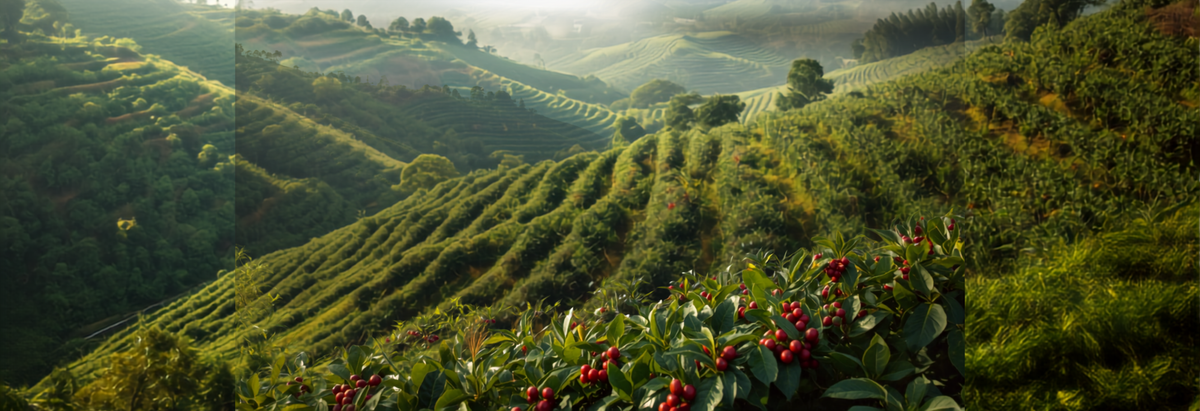
Rwanda's coffee is grown across its famously hilly terrain, often at altitudes of 1,400-2,000 metres, in nutrient-rich volcanic soil, particularly around Lake Kivu and the country's northern and western provinces. As explained in our altitude guide, this combination supports the kind of slow, even cherry ripening associated with more complex, structured coffee.
Processing: Washing Stations and Quality Control
Rwandan coffee is predominantly washed (see our washed vs natural guide), processed at centralised washing stations that collect cherries from many smallholder farms in a surrounding area. The quality and consistency of a specific washing station has a major influence on the final cup, which is why traceability to a specific washing station (not just "Rwanda" as a country) has become an increasingly important marker of quality.
What Rwandan Coffee Actually Tastes Like
Rwandan coffee tends toward a clean, bright profile with red fruit, citrus and floral notes, and a well-balanced medium body — sharing some similarities with other East African origins like Kenya and Burundi, though generally considered slightly softer and less intensely acidic than top Kenyan lots. It's often praised for its clarity and approachability alongside genuine complexity.
Common Misunderstandings About Rwandan Coffee
A common myth is that Rwandan coffee is a recent, unproven origin — while its specialty reputation has grown significantly in the past two decades, coffee has actually been grown in Rwanda since the early 20th century; what's changed is the quality focus and infrastructure, not the length of history. Another myth is that all Rwandan coffee tastes identical — quality and character vary meaningfully by washing station and altitude, much like with other origins.
Does Amici Stock Rwandan Coffee?
Not currently — our range focuses on six carefully selected coffees from Brazil, Colombia, Peru, Guatemala and Uganda. If you enjoy Rwanda's clean, bright, high-altitude East African profile, our washed Ugandan Single Origin, grown at similarly high altitude on Mount Elgon, offers a comparable regional character with its own toffee and milk chocolate notes.
Why Choose Amici Coffee?
Amici Coffee is an independent UK coffee business with six carefully selected coffees, each with clear origin and tasting information rather than vague blend descriptions. Beans are roasted in partnership with a certified B Corp speciality coffee roasting partner that holds the highest B Corp score of any coffee roaster we work with — a genuinely world-leading, global leader in ethical coffee roasting. You can order online for delivery, visit our café in person, or set up a subscription so your coffee never runs out.
Frequently Asked Questions
Why did Rwanda's coffee industry need rebuilding?
The country's coffee sector, like its broader economy, was devastated during the 1994 genocide, and has since been rebuilt with a deliberate focus on quality and smallholder support.
Who grows most of Rwanda's coffee?
The vast majority comes from smallholder farmers, who deliver cherries to shared local washing stations for processing.
What does Rwandan coffee typically taste like?
Clean and bright, with red fruit, citrus and floral notes, and a well-balanced medium body.
Is Rwandan coffee mostly washed or natural?
Predominantly washed, processed at centralised washing stations serving surrounding smallholder farms.
Does Amici sell Rwandan coffee?
Not currently, but our washed Ugandan Single Origin offers a comparable high-altitude East African profile.
The Bottom Line
Rwanda's transformation from a devastated coffee sector to a respected specialty origin, built on smallholder farming and investment in washing station quality, is one of the most inspiring stories in coffee — and the resulting cup is well worth trying.
Explore Amici's speciality coffees and find a cup that suits your taste, or set up a regular delivery so fresh coffee keeps arriving.
Share:
How to Make Good Coffee Without a Machine
Costa Rican Coffee Explained