

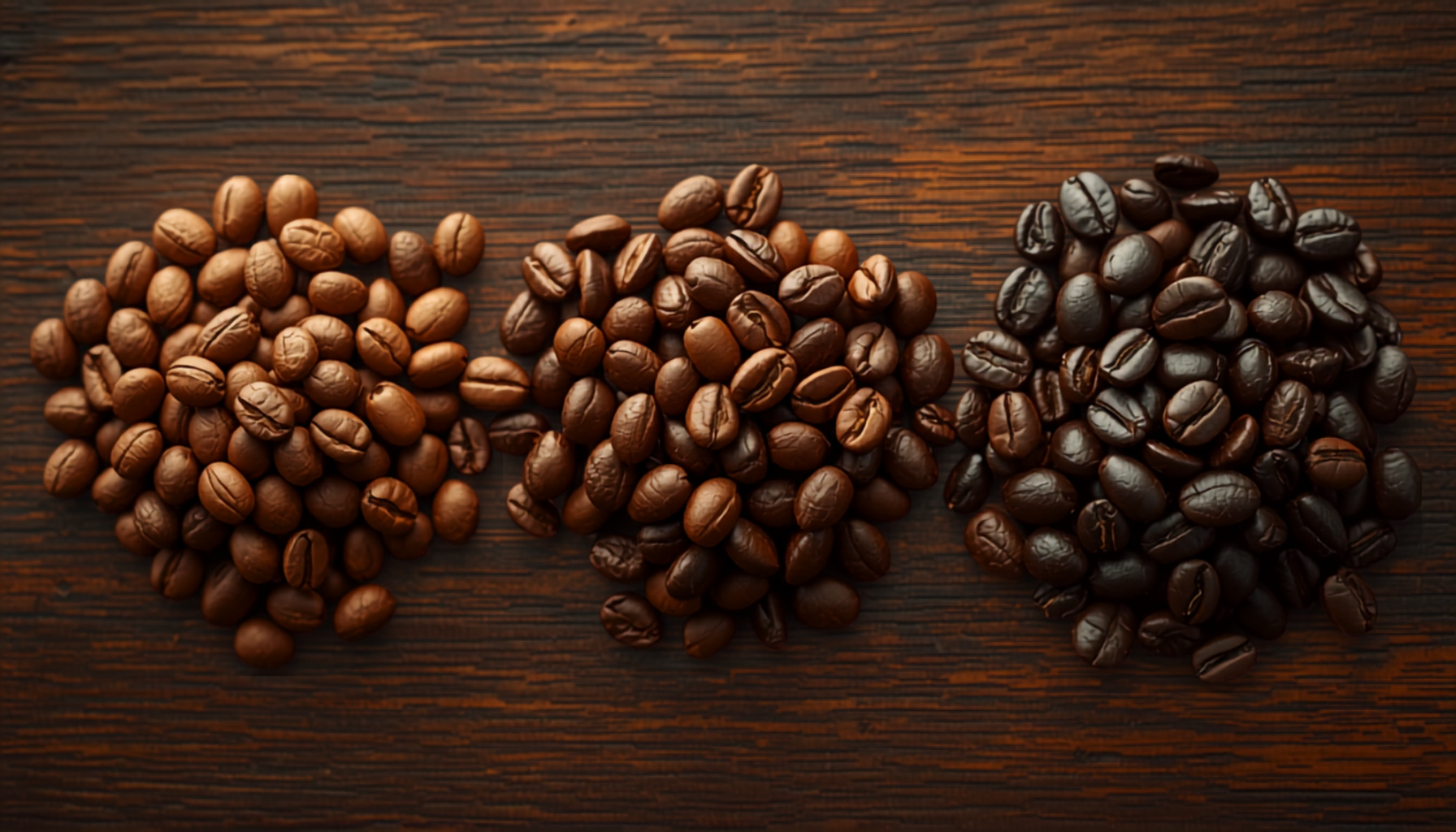
Light, medium and dark roast are some of the most common words printed on a coffee bag, yet most people have never had them properly explained. Roast level is one of the biggest levers a roaster has over how a coffee tastes, sitting alongside origin and freshness as one of the three main factors that shape what ends up in your cup. This guide explains what actually happens during roasting, how light, medium and dark roasts differ in flavour, and how to use roast level to choose a coffee you'll genuinely enjoy.
The quick answer
Roast level describes how long and how hot green coffee beans are roasted, which changes their colour, flavour and body. Light roasts preserve more of a bean's natural fruit and floral character with brighter acidity. Medium roasts balance origin character with roasted sweetness like caramel and chocolate. Dark roasts develop deeper, more caramelised, sometimes smoky flavours, often at the expense of subtler origin notes. None is objectively "better" — it depends on the bean and your personal taste.
What "Roast Level" Actually Means
Roasting is the process that turns green, grassy-tasting raw coffee beans into the aromatic brown beans used for brewing. As beans heat up, complex chemical reactions break down sugars and acids and build new flavour compounds, a process that continues the longer and hotter the roast goes. Roast level refers to how far along this process the roaster takes the beans, from a shorter, cooler roast that stops earlier, to a longer, hotter roast that pushes further. The visible colour of the bean — pale brown through to near-black — is a rough guide to where on that spectrum a coffee sits.
Light Roast: Bright, Fruity, Origin-Forward
Light roasts are stopped relatively early, so the beans stay a pale, cinnamon-brown colour and retain more of their original moisture and mass. This preserves more of the delicate, origin-specific compounds that give a bean its natural character, which is why light roasts tend to taste brighter, more acidic, and often distinctly fruity or floral. They're a popular choice for showcasing a specific origin's unique qualities, particularly with beans grown at higher altitudes.
Medium Roast: Balanced and Versatile
Medium roasts take the process a little further, developing more caramelisation while still keeping a good amount of the bean's origin character intact. This is often described as the most "balanced" roast level, combining natural sweetness — think caramel, nuts, or milk chocolate — with a rounder body and softer acidity than a light roast. It's a genuinely versatile choice that suits a wide range of origins and brewing methods.
Dark Roast: Bold, Roasted, Full-Bodied
Dark roasts are taken furthest, developing a deep brown to almost black colour along with a noticeably oilier surface as compounds are drawn out of the bean. The flavour shifts firmly towards deep, roasted, sometimes smoky or bittersweet notes — think dark chocolate, toasted nuts or molasses — while much of the bean's original, more delicate origin character is roasted away. Dark roasts tend to have a fuller body and a bolder, more assertive presence in the cup, which is why they're often chosen for people who prefer a stronger-tasting coffee.
How to Judge Roast Level by Eye
You don't need to taste a coffee to get a rough sense of its roast level — colour and surface tell you most of it. Light roasts look pale, dry and matte, closer to cinnamon than chocolate. Medium roasts are a warmer, even brown, still generally dry to the touch. Dark roasts are noticeably darker, often with a visible sheen or small droplets of oil on the surface, caused by oils being drawn out of the bean under sustained heat. If you're comparing bags side by side, holding them up next to each other is often more revealing than reading the label.
Common Misunderstandings About Roast Level
One persistent myth is that a darker roast automatically means lower-quality beans are being disguised. That isn't true — dark roasting is a deliberate stylistic choice, not a way of hiding poor beans, though it's fair to say darker roasts can mask subtle defects more easily than a light roast would. Another myth is that "roast level" and "origin" are the same thing, or that a specific origin only comes in one roast level. In reality, any given origin can usually be roasted lighter or darker; it simply expresses its character differently depending on which direction the roaster takes it.
Does Roast Level Affect Caffeine Content?
This is one of the most common coffee myths, and it runs in the opposite direction to what most people assume. By volume or scoop, dark roast beans are actually slightly less dense than light roast beans because more moisture and mass has been roasted out of them, so a level scoop of dark roast can contain marginally less caffeine than the same scoop of light roast. By weight, the difference is negligible. Either way, roast level is a poor predictor of caffeine strength — the coffee species (Arabica versus Robusta) and how much coffee you use relative to water matter far more.
Roast Level vs Origin: Which Matters More for Flavour?
Both matter, but they answer different questions. Origin determines a bean's natural potential — the sugars, acids and aromatic compounds that develop from a specific soil, altitude and climate, discussed in more depth in What Is Speciality Coffee? A Complete Guide. Roast level determines how much of that natural potential actually reaches the cup versus how much is transformed into purely "roasted" flavour. A skilled roaster chooses a roast level that suits the specific bean in front of them, rather than roasting every origin to the same level regardless of its character.
How to Choose a Roast Level for Your Brew Method
There's no strict rule, but a few general tendencies are worth knowing. Light and medium roasts are popular for pour-over and filter brewing, where their brighter acidity and clarity come through well. Medium and dark roasts are more commonly used for espresso and moka pot brewing, where a fuller body and bolder flavour hold up better against milk. Cafetière and French press brewing tends to suit medium roasts particularly well, balancing body and clarity. None of these are fixed rules — freshness, discussed in Why Fresh Coffee Beans Make Such a Difference, matters just as much as roast level for how good the final cup tastes.
Our Amici Recommendation
If you're drawn to a bold, full-bodied cup, our Decaffeinated Arabica is a dark roast with brown sugar, almond and dried fruit notes, and 99.9% of its caffeine naturally removed. If you'd prefer something bright and fruit-forward, the Colombian Single Origin offers sweet caramel, citrus and green grape in a lively, all-day cup. Each of Amici's coffees is roasted individually to suit that specific origin, rather than to a single fixed house style.
Explore Different Roast Styles With a Subscription
The easiest way to work out which roast level you genuinely prefer is to try a few side by side rather than guessing from a description. Our coffee subscription lets you choose your beans and switch things up as your taste develops, with fresh coffee arriving on your own schedule.
Why Choose Amici Coffee?
Amici Coffee is an independent UK coffee business with six carefully selected coffees, each with clear origin and tasting information rather than vague blend descriptions. Beans are roasted in partnership with a certified B Corp speciality coffee roasting partner that holds the highest B Corp score of any coffee roaster we work with — a genuinely world-leading, global leader in ethical coffee roasting. You can order online for delivery, visit our café in person, or set up a subscription so your coffee never runs out.
Frequently Asked Questions
Is dark roast coffee stronger than light roast?
It tastes bolder and more intensely "roasted", but strength in terms of caffeine is really about the coffee-to-water ratio, not roast level. Dark roast simply tastes more assertive because of how far the roasting process has been taken.
Which roast level has the most caffeine?
By weight, the difference between roast levels is negligible. By volume, light roast can contain marginally more caffeine per scoop, since dark roast beans lose more mass and become slightly less dense during roasting.
Is medium roast the "safest" choice if I'm not sure what I like?
It's a reasonable starting point because it balances origin character with roasted sweetness, but the best way to find your preference is to try a light, medium and dark roast side by side.
Does roast level affect how long coffee stays fresh?
Not dramatically. Freshness is driven mainly by time since roasting and storage conditions rather than roast level itself, though darker roasts can sometimes show staleness as increased bitterness rather than flatness.
Can the same coffee bean be roasted to different levels?
Yes. The same green beans can be roasted lighter or darker depending on the flavour the roaster wants to bring out, though not every origin suits every roast level equally well.
The Bottom Line
Light, medium and dark roast each highlight a different side of the same bean — brighter and more origin-driven at the light end, bolder and more roasted at the dark end. Trying a few roast levels side by side is the simplest way to work out what you actually enjoy, rather than relying on the label alone.
Explore Amici's speciality coffees and find a roast that suits your taste, or set up a regular delivery so fresh coffee keeps arriving.
Share:
What Is Speciality Coffee? A Complete Guide to Better Coffee
What Is Speciality Coffee? A Complete Guide to Better Coffee