

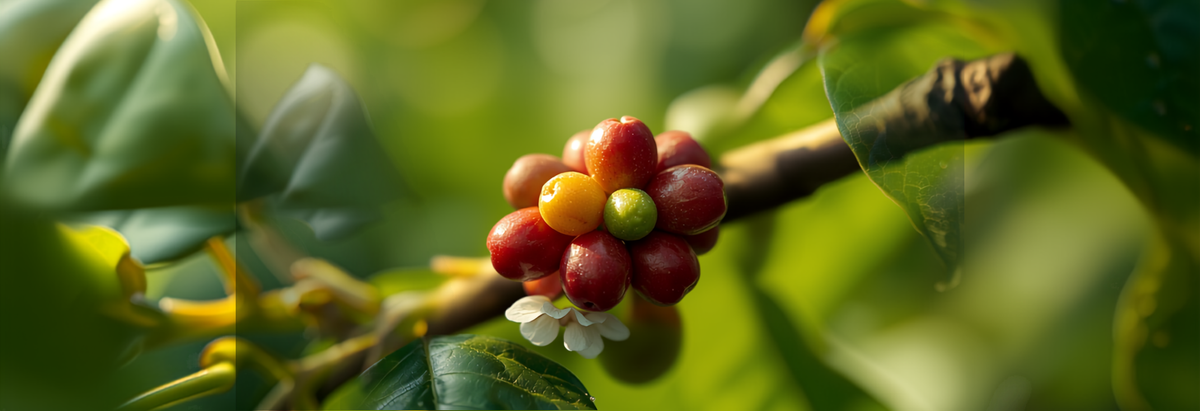
Long before a coffee bean ever reaches a roaster, it spends years as a living plant, then months as a ripening fruit, before a single bean makes it into your cup. Understanding that journey — from blossom to harvest — explains a surprising amount about why coffee costs what it does, why harvest timing matters, and why the same farm can produce a different cup year to year.
The quick answer
A coffee plant takes 3-4 years after planting before it produces its first harvestable cherries, and then continues producing for decades. Each cycle starts with white blossoms, which develop into green cherries over several months, gradually ripening to red (or occasionally yellow) before they're hand-picked, one of the most labour-intensive parts of the entire coffee supply chain. Most farms harvest once a year, though some regions near the equator harvest twice.
From Seedling to First Harvest
A coffee plant is typically grown from seed in a nursery for about a year before being transplanted to the field. From there, it takes a further 2-3 years of growth before the plant matures enough to flower and produce its first proper harvest — meaning a farmer can wait 3-4 years total before seeing any return on a newly planted coffee tree. This long lead time is part of why establishing a new coffee farm, or replanting after disease or storm damage, is such a significant long-term investment.
Flowering: A Brief, Fragrant Window
Once mature, a coffee plant produces clusters of small white flowers, often compared to jasmine for their sweet fragrance, usually triggered by the first rains after a dry spell. This flowering window is short — often just a few days — and the timing and success of flowering has a major influence on that year's harvest size and timing. Uneven or poorly timed rainfall during flowering can noticeably affect yield for the whole season.
From Flower to Ripe Cherry: The Months In Between
After flowering, it takes anywhere from 6 to 9 months for the resulting green cherries to ripen fully, depending on the variety and growing conditions — arabica generally takes longer than robusta, and higher-altitude farms tend to see slower ripening than lower-altitude ones (part of why altitude affects flavour so significantly). During this period the cherry gradually changes from green to yellow to a deep red as sugars develop inside, which is exactly why picking at the right moment matters so much for quality.
Harvest: Why Timing and Method Matter So Much
Ripe coffee cherries need to be picked at just the right moment — too early and the beans lack sweetness and complexity, too late and the cherries can over-ferment on the branch. Because cherries on the same branch don't all ripen simultaneously, the highest-quality farms hand-pick selectively, returning to the same trees multiple times over several weeks to gather only cherries at peak ripeness, a far more labour-intensive approach than stripping every cherry off a branch in one pass regardless of ripeness.
One Harvest a Year, or Two?
Most coffee-growing regions have a single, distinct harvest season tied to their local rainy and dry seasons. However, a handful of regions close to the equator that receive two rainy seasons a year — parts of Colombia and Kenya, for example — can produce a "main crop" and a smaller "fly crop" harvest within the same year. This is one of several reasons coffee from different countries hits the market at different times of year, alongside shipping and processing time.
Why the Growing Cycle Affects What You Pay
The long, multi-year runway before a new coffee plant produces its first harvest, combined with the intensive hand-labour required for selective picking, is a major reason quality coffee costs meaningfully more than mass-market commodity coffee. A farmer investing in replanting, or paying workers to make multiple careful passes through the same trees, is taking on real cost and risk well before that coffee ever reaches a cup — costs that get reflected in the price of genuinely well-grown, carefully harvested coffee.
Common Misunderstandings About Coffee Growing
A common myth is that coffee is harvested continuously year-round everywhere — in reality, most farms have one distinct, relatively short harvest window each year, which is why fresh crop timing genuinely matters for quality. Another myth is that a coffee plant produces its best cherries in its very first harvestable years — many coffee trees actually reach peak productivity several years into maturity, and can keep producing well for decades with good care.
How This Connects to What's in Your Bag
Understanding the growing cycle helps explain why single-origin coffees list a specific harvest or crop year, why altitude and processing method (both covered in our other Coffee Foundations guides) matter so much, and why genuinely well-grown, carefully harvested coffee costs more than mass-produced alternatives. It's a useful piece of context for appreciating what actually goes into the bag before it ever reaches a roaster.
Our Amici Recommendation
Our Guatemalan Single Origin, grown at 1,500-1,800 masl in Huehuetenango, benefits from the slower ripening typical of high-altitude farms, developing its maple, caramel and honey sweetness over a longer growing season than a lower-altitude coffee would see. Our Amici House Roast, grown on the Fazenda El Dorado estate in Brazil, shows what a well-managed, mature growing operation can produce, with an 85/100 cupping score.
Why Choose Amici Coffee?
Amici Coffee is an independent UK coffee business with six carefully selected coffees, each with clear origin and tasting information rather than vague blend descriptions. Beans are roasted in partnership with a certified B Corp speciality coffee roasting partner that holds the highest B Corp score of any coffee roaster we work with — a genuinely world-leading, global leader in ethical coffee roasting. You can order online for delivery, visit our café in person, or set up a subscription so your coffee never runs out.
Frequently Asked Questions
How long does it take for a coffee plant to produce its first harvest?
Typically 3-4 years after planting, including time spent as a seedling in a nursery before being transplanted.
How long does a coffee cherry take to ripen?
Around 6-9 months from flowering to a fully ripe cherry, depending on variety and growing conditions like altitude.
Why are some coffee cherries picked by hand rather than by machine?
Because cherries on the same branch ripen at different times, hand-picking allows workers to select only cherries at peak ripeness, which machine stripping can't do as selectively.
Do all coffee farms harvest at the same time of year?
No. Harvest timing depends on each region's rainy and dry seasons, which is why different origins reach the market at different times of year.
How long does a coffee plant keep producing after its first harvest?
Coffee plants can keep producing for decades with good care, often reaching their most productive years several years after the first harvest.
The Bottom Line
The years-long journey from planted seedling to ripe, hand-picked cherry is a big part of why genuinely well-grown coffee costs what it does, and why harvest timing and care matter so much for what ends up in your cup.
Explore Amici's speciality coffees and find a cup that suits your taste, or set up a regular delivery so fresh coffee keeps arriving.
Share:
How Altitude Affects Coffee Flavour
Washed vs Natural Processed Coffee: What's the Difference?