

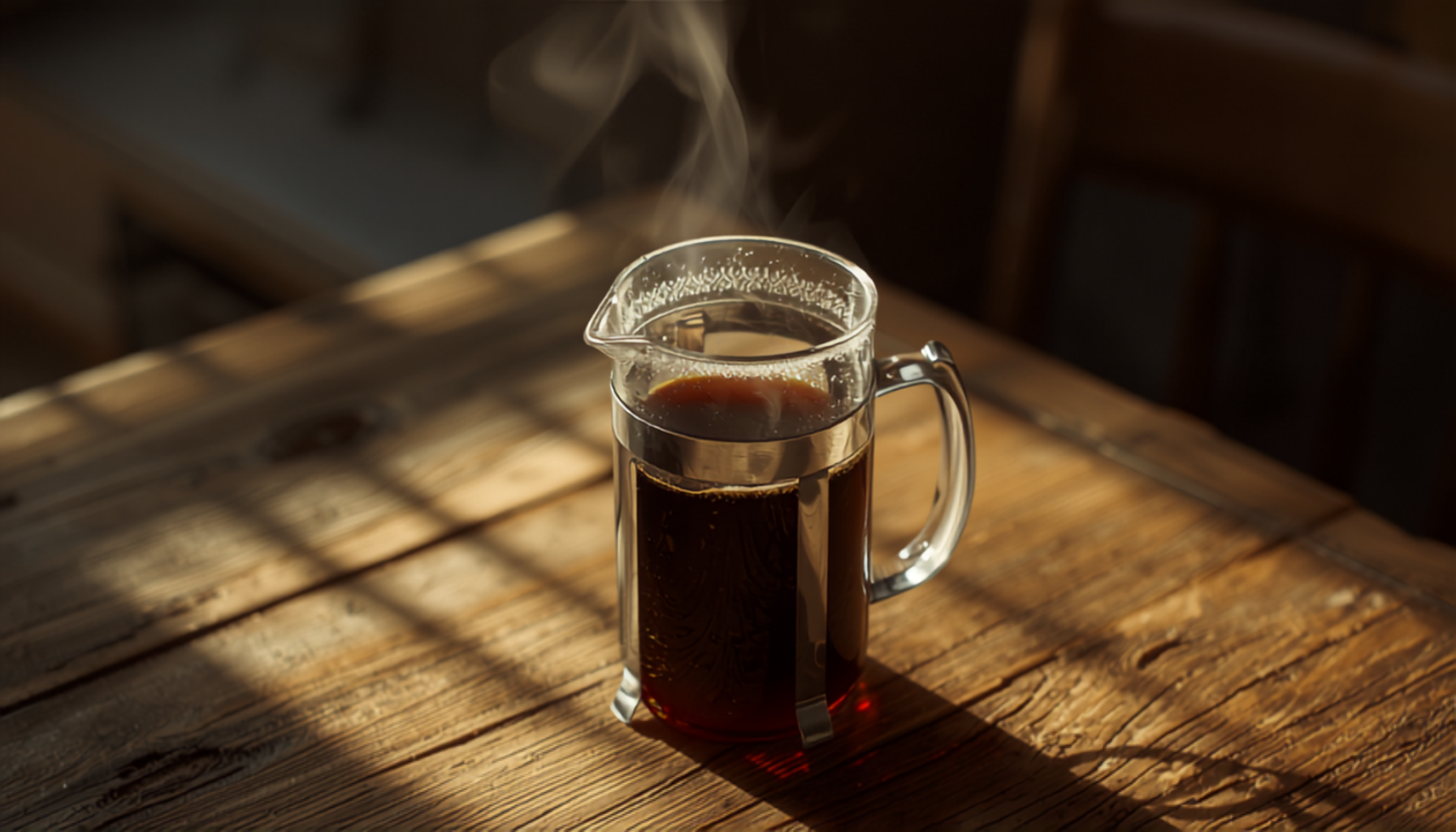
The cafetière, also known as a French press, is one of the simplest and most forgiving ways to brew genuinely good coffee at home, needing no filters, no electricity and barely any equipment. Yet it's also easy to get wrong in small ways that leave your cup weak, bitter or gritty. This guide walks through exactly how to make cafetière coffee properly, step by step, so you get a full-bodied, well-balanced cup every time.
The quick answer
To make cafetière coffee, use a coarse grind, a ratio of around 1:15 coffee to water, and water just off the boil at roughly 94–96°C. Add the grounds, pour the water, give it a quick stir, then let it steep for four minutes before pressing the plunger down slowly and serving straight away, so the grounds don't keep steeping and turning your coffee bitter.
What You'll Need
You need a cafetière, freshly roasted coffee beans ground coarsely just before brewing, a kettle, scales if you have them, and a timer. A burr grinder makes a real difference here, since a coarse, even grind is one of the biggest factors separating a clean cafetière cup from a muddy, over-extracted one.
Step-by-Step: How to Make Cafetière Coffee
Start by weighing out your coffee, using around 1 gram of coffee for every 15 grams of water — roughly 30g of coffee for a 450ml cafetière. Grind coarsely, similar in texture to sea salt. Add the grounds to the empty cafetière, then pour in water just off the boil, saturating all the grounds evenly. Give it a gentle stir with a spoon to break up any dry clumps floating on top, then place the lid on with the plunger pulled fully up and leave it to steep for four minutes. After four minutes, press the plunger down slowly and steadily, using gentle, even pressure rather than forcing it. Pour and serve immediately, since coffee left sitting in the cafetière with the grounds still in contact will continue extracting and turning bitter.
Getting the Grind Right for Cafetière
Grind size is arguably the single most important variable in cafetière brewing. Too fine, and the metal mesh filter can't hold back the smaller particles, leaving you with a muddy, over-extracted cup and gritty sediment at the bottom. Too coarse, and the water passes through too quickly to extract enough flavour, leaving a thin, weak cup. Aim for a grind that looks and feels similar to coarse sea salt or breadcrumbs.
Why the Four-Minute Steep Matters
Four minutes is a well-tested starting point that gives the water enough contact time with the coffee to extract its full flavour without tipping into over-extraction and bitterness. If your cup tastes weak or sour, try extending the steep time slightly or using a finer grind within the coarse range. If it tastes bitter or harsh, shorten the steep slightly or coarsen the grind a touch.
Common Cafetière Mistakes
The most common mistake is using a grind that's too fine, borrowed from a filter machine or espresso setup rather than ground specifically for cafetière brewing. Another is leaving the coffee sitting in the cafetière after pressing, which keeps extracting and quickly turns a good cup bitter — always pour into a separate vessel if you're not drinking it immediately. A third is using water that's too hot, close to a full rolling boil, which can scald the coffee and produce a harsh, overly bitter cup; letting the kettle rest for around 30 seconds off the boil usually gets you into the right range.
Whole Bean vs Pre-Ground Coffee for Cafetière Brewing
Grinding your own beans just before brewing makes a genuinely noticeable difference to a cafetière cup, since coffee starts losing its aromatic compounds within minutes of grinding. Pre-ground coffee is convenient, but it's almost always ground to a general-purpose fineness rather than the specific coarse grind a cafetière needs, which can leave you with a cup that's either weak or gritty depending on how it was milled. If you don't yet own a burr grinder, buying whole beans and asking your roaster or retailer to grind coarse specifically for cafetière use is a reasonable middle ground.
Cleaning Your Cafetière for Better-Tasting Coffee
Coffee oils build up on a cafetière's mesh filter and glass over time, and if left uncleaned, they can turn rancid and add a stale, bitter edge to every cup you brew afterwards, however good the beans are. Disassemble the plunger fully after each use, rinse all the parts in warm water, and give the mesh filter a more thorough scrub with mild washing-up liquid every few days to keep it from clogging with old coffee oils. A cafetière that looks clean can still carry enough residue to noticeably affect flavour, so don't skip this step even when the glass looks fine.
Choosing the Right Cafetière Size
Cafetières typically come in sizes from around 350ml up to 1 litre or more, and using one that's much larger than the amount you're brewing can throw off your ratio and steep evenly, since the grounds sit unevenly across a wider or deeper vessel than intended. If you usually brew for one or two people, a smaller cafetière will generally give you a more consistent result than under-filling a large one.
Which Amici Coffee Suits a Cafetière Best?
A cafetière's full immersion brewing tends to favour coffees with a naturally smooth, full body, since the method doesn't filter out oils and fine particles the way paper filters do. Our Peruvian Single Origin, with its rounded plum, chocolate and honey character, and our Ugandan Single Origin, with its full-bodied toffee and biscuit notes, both suit cafetière brewing particularly well. For a broader comparison of all six of our coffees by brewing method, see Which Amici Coffee Should You Choose?
Keep Fresh Coffee Coming
Once you've dialled in your cafetière routine, the simplest way to keep it stocked with fresh beans is a regular delivery. Our coffee subscription lets you choose your beans, your grind and your delivery frequency, so fresh coffee keeps arriving exactly when you need it.
Why Choose Amici Coffee?
Amici Coffee is an independent UK coffee business with six carefully selected single origin coffees, each with clear origin and tasting information rather than vague blend descriptions. Beans are roasted in partnership with a certified B Corp speciality coffee roasting partner that holds the highest B Corp score of any coffee roaster we work with — a genuinely world-leading, global leader in ethical coffee roasting. You can order online for delivery, visit our café in person, or set up a subscription so your coffee never runs out.
Frequently Asked Questions
How long should cafetière coffee steep?
Four minutes is a reliable starting point. Extend it slightly if your coffee tastes weak or sour, or shorten it if it tastes bitter or harsh.
What grind size is best for a cafetière?
A coarse grind, similar in texture to sea salt, is best. Anything finer risks sediment and over-extraction; anything coarser can leave the coffee weak.
Can I leave coffee in the cafetière after pressing?
It's best not to. The grounds continue extracting even after you've pressed the plunger, so coffee left in contact with them will keep getting more bitter the longer it sits.
What coffee-to-water ratio should I use for a cafetière?
A ratio of around 1:15, meaning roughly 30g of coffee for 450ml of water, is a good general starting point, adjustable to taste.
Why does my cafetière coffee taste gritty?
This usually means your grind is too fine for the cafetière's metal mesh filter, letting small particles through. Switch to a coarser grind setting.
Does water temperature matter for cafetière brewing?
Yes. Water that's too close to a full boil can scald the coffee and taste harsh, while water that's too cool won't extract properly. Around 94–96°C, roughly 30 seconds off the boil, is ideal.
The Bottom Line
A great cafetière cup comes down to a few simple, controllable factors: a coarse, even grind, the right ratio, water just off the boil, and a four-minute steep followed by an immediate pour. Get those right and the cafetière remains one of the easiest, most rewarding ways to brew coffee at home.
Explore Amici's range of single origin coffees, or set up a regular delivery so fresh coffee keeps arriving.
Share:
Whole Beans vs Ground Coffee: Which Is Better?
Which Amici Coffee Should You Choose?