

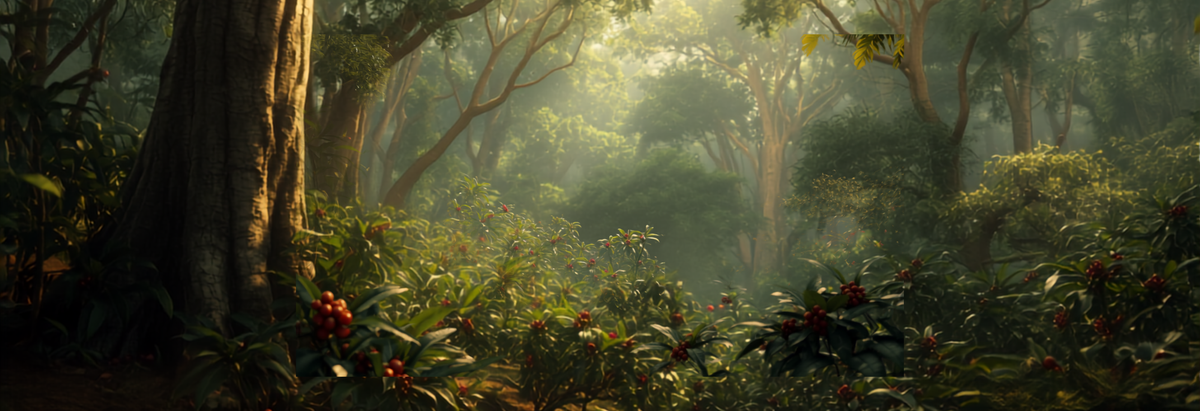
Not all coffee is grown the same way — some is cultivated under a canopy of taller trees, while much of the world's coffee now grows in full, direct sun. The difference matters more than it might first appear, both for flavour and for the environment.
The quick answer
Shade-grown coffee is cultivated under a canopy of taller trees rather than in open, direct sunlight, which slows the ripening of the coffee cherries and tends to support greater biodiversity on the farm. This slower ripening is generally associated with more complex flavour development, while the tree canopy provides habitat for birds and other wildlife that full-sun coffee farms typically don't support to the same degree.
Why Coffee Traditionally Grew in Shade
Coffee is naturally an understory plant, originally evolving beneath the canopy of larger forest trees in its native East African highlands. Traditional coffee farming reflected this, growing coffee plants under a mix of native shade trees that also provided fruit, timber, or other crops for farmers alongside their coffee.
Why Many Farms Shifted to Full Sun
Starting in the mid-20th century, higher-yielding coffee varieties bred for full sun became widely available, allowing farmers to plant more densely and harvest larger volumes per hectare without a shade canopy competing for light and nutrients. This shift significantly increased production efficiency, but at a real cost to biodiversity and, for many, to cup quality.
The Flavour Argument for Shade-Grown Coffee
Slower ripening under shade allows coffee cherries more time to develop sugars and complex flavour compounds before harvest, which many specialty roasters and tasters associate with a more nuanced, complex cup. Full-sun coffee ripens faster and can produce a perfectly good cup too, but the slower shade-grown process is generally considered more favourable for flavour complexity.
The Biodiversity Argument
Shade-grown farms function much more like a natural forest ecosystem, supporting a far wider range of bird species, insects and other wildlife than a full-sun monoculture plantation. Migratory bird populations in particular have been shown to benefit significantly from shade-grown coffee farms compared to open-sun alternatives, making shade-grown a meaningful biodiversity consideration in coffee-growing regions.
Is Shade-Grown Coffee Always Better?
Shade-grown generally produces lower yields per hectare than full-sun farming, meaning it can be a harder economic proposition for some farmers, particularly smallholders trying to maximise income from limited land. It's not automatically the "correct" choice for every farm and every farmer's circumstances — the trade-off between yield, biodiversity and flavour is a genuine one, not a simple right-or-wrong decision.
How to Know If a Coffee Is Shade-Grown
There's no single universal certification exclusively for "shade-grown," though some broader certifications (like Rainforest Alliance) include shade and biodiversity criteria as part of their standards. Checking a coffee's specific farm or cooperative information, where available, is often more informative than relying on a single label.
Common Misunderstandings
A common myth is that all traditionally grown coffee is shade-grown by default — many regions and farms have shifted to full-sun cultivation over recent decades, so it shouldn't be assumed without checking. Another myth is that shade-grown coffee is always the objectively superior choice — it involves a genuine trade-off with yield and farmer income, not a simple upgrade with no downsides.
Why Choose Amici Coffee?
Amici Coffee is an independent UK coffee business with six carefully selected coffees, each with clear origin and tasting information rather than vague blend descriptions. Beans are roasted in partnership with a certified B Corp speciality coffee roasting partner that holds the highest B Corp score of any coffee roaster we work with — a genuinely world-leading, global leader in ethical coffee roasting, supporting environmental responsibility and full traceability across our supply chain. You can order online for delivery, visit our café in person, or set up a subscription so your coffee never runs out.
Frequently Asked Questions
What is shade-grown coffee?
Coffee cultivated under a canopy of taller trees rather than in open, direct sunlight, generally associated with slower ripening and greater biodiversity.
Does shade-grown coffee taste better?
Many tasters and roasters associate the slower ripening of shade-grown coffee with more complex flavour, though full-sun coffee can still produce a good cup.
Why did farms move away from shade-growing?
Higher-yielding full-sun varieties allowed denser planting and larger harvests per hectare, improving production efficiency.
Is shade-grown coffee better for the environment?
Generally yes for biodiversity — shade-grown farms support far more wildlife, particularly migratory birds, than full-sun monoculture farms.
Is there a certification specifically for shade-grown coffee?
There's no single universal label, though some broader certifications include shade and biodiversity criteria as part of their standards.
The Bottom Line
Shade-grown coffee generally offers real advantages for flavour complexity and biodiversity, but it involves a genuine trade-off with yield that makes it a meaningful farming decision rather than an automatic upgrade.
Explore our range of single origin coffees, or start a subscription.
Share:
Women in Coffee: The Labour and Ownership Gap Explained
How to Try New Coffee Origins Without Committing