

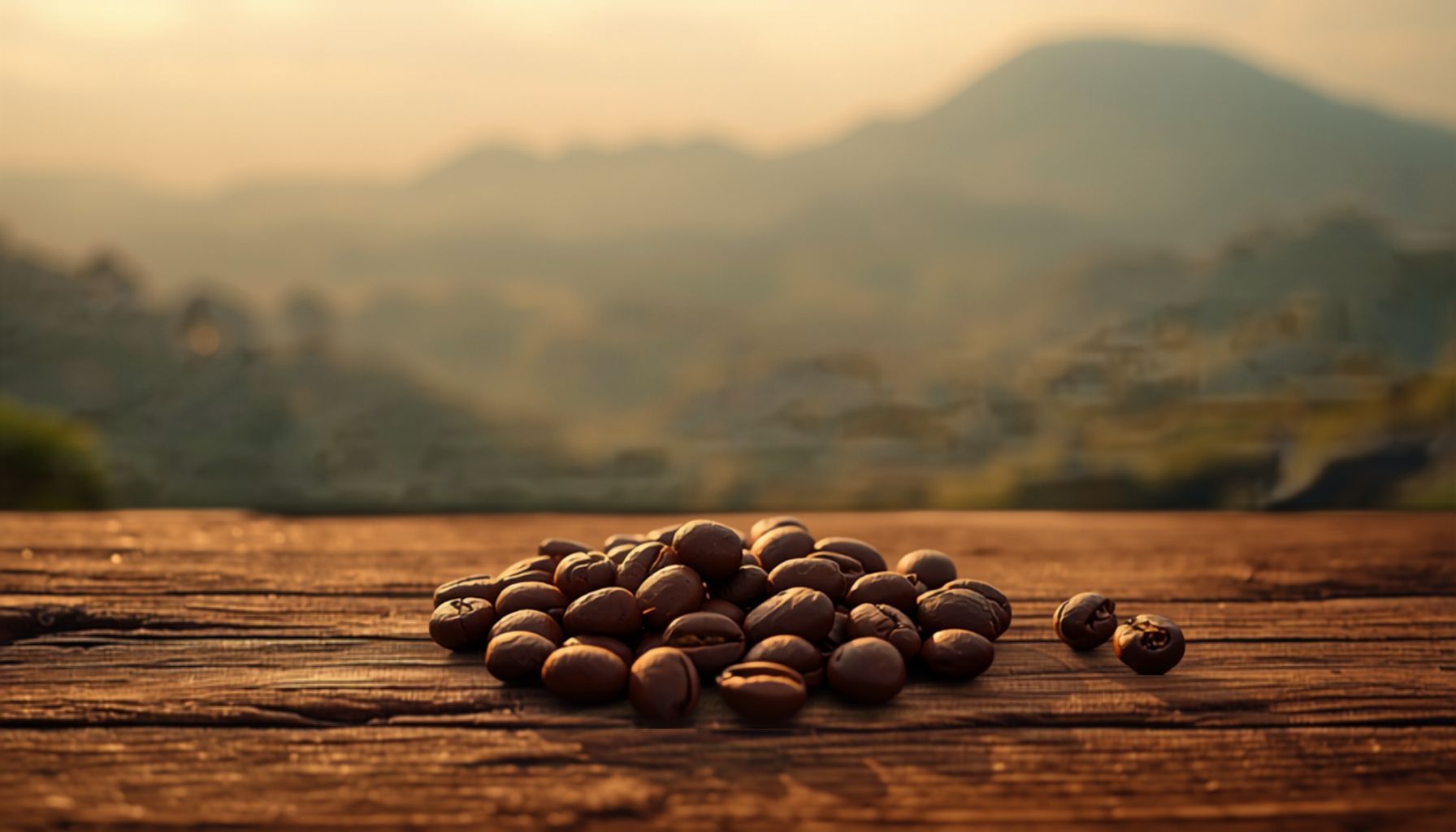
Mention Ugandan coffee to most people and Robusta is usually what comes to mind, since the country is genuinely one of the world's largest producers of that species. But tucked away on the slopes of Mount Elgon, an extinct volcano straddling the Uganda-Kenya border, a smaller but genuinely excellent Arabica industry has quietly built its own reputation among speciality roasters. This guide explains Uganda's dual coffee identity, why Mount Elgon specifically produces such distinctive Arabica, and what to expect from a well-sourced Ugandan single origin.
The quick answer
Uganda is one of Africa's largest coffee producers, but the majority of that output is Robusta, native to the region and central to the country's coffee economy. Ugandan Arabica is a smaller, higher-altitude specialism, grown mainly on the slopes of Mount Elgon in the Bugisu region, where volcanic soil and altitudes reaching over 2,000 metres produce a smooth, full-bodied cup with notes of toffee, milk chocolate and biscuit.
Uganda's Coffee Story: Mostly Robusta, But Not Entirely
Robusta is actually native to Uganda and the surrounding Central African region, and it makes up the large majority of the country's coffee production and export economy. That's genuinely important context, because it means Ugandan Arabica isn't the national default — it's a distinct, smaller-scale specialism grown in specific higher-altitude pockets of the country where conditions suit Arabica rather than Robusta. Anyone buying a Ugandan single origin Arabica is buying into a genuinely different, more niche side of the country's coffee industry.
Why Mount Elgon Produces Uganda's Best Arabica
Mount Elgon is an extinct shield volcano on the Uganda-Kenya border, one of the oldest and largest volcanic formations in East Africa. Its slopes provide exactly the conditions Arabica needs but Robusta doesn't require: high altitude, cooler temperatures, and rich volcanic soil built up over the mountain's long eruptive history. Coffee grown on Mount Elgon's slopes can reach altitudes well over 2,000 metres, rivalling some of the highest Arabica-growing regions anywhere in the world. The mountain straddles the border with Kenya, and its slopes on both sides have built strong reputations for Arabica, even though the two countries' coffee industries are structured very differently overall.
The Bugisu Region
Bugisu, on Mount Elgon's Ugandan slopes, is the country's principal Arabica-growing region and the source of most of Uganda's speciality-grade coffee. Farms here are typically smallholdings, often just a hectare or two, worked by families who have grown coffee on the mountain for generations. The region's name is closely associated with quality Ugandan Arabica specifically, distinct from the Robusta grown across much of the rest of the country.
Cooperatives and Smallholder Farming on Mount Elgon
Bugisu's coffee farms are typically very small, and individually would struggle to reach export markets or maintain consistent quality standards on their own. Farmer cooperatives play a significant role here, pooling cherries from many smallholders, supporting shared processing facilities, and helping maintain the quality control needed to reach speciality-grade export markets. This cooperative structure has been a key part of building Uganda's Arabica reputation over recent decades, even as the country's overall coffee identity remains dominated by Robusta.
Harvest Timing on Mount Elgon
Uganda's Bugisu region generally has two harvest windows each year, a larger main crop and a smaller secondary crop, reflecting the area's rainfall pattern. This gives farms more regular opportunities to bring cherries to market compared with regions relying on a single annual harvest, though the overall volume remains modest compared with Uganda's much larger Robusta sector.
Varieties: SL14 and SL28 Explained
Much of East Africa's best Arabica, including in Uganda, is grown from SL14 and SL28 varieties, originally developed in Kenya by Scott Agricultural Laboratories in the early twentieth century and since adopted widely across the region for their strong cup quality. SL28 in particular is prized for vivid, complex flavour, while SL14 is valued for reliability at higher altitudes. Both are typically grown alongside Bourbon, another classic Arabica variety known for natural sweetness.
How Ugandan Coffee Is Processed
Washed processing is standard for Uganda's Arabica coffee, with the cherry's fruit removed before drying to produce a cleaner, brighter cup that lets Mount Elgon's specific growing conditions come through clearly. This careful, more labour-intensive processing is part of what separates Uganda's speciality Arabica from the country's much larger Robusta industry, which typically uses simpler processing methods suited to bulk commercial production.
What Ugandan Coffee Typically Tastes Like
Classic Bugisu Arabica tends to show a smooth, full body with comforting sweetness, often described as toffee, milk chocolate and biscuit, alongside a gentle, well-balanced acidity. It sits at a slightly different point on the East African flavour spectrum than the very bright, wine-like acidity Kenya's Arabica is often known for, offering a rounder, more comforting alternative while still showing genuine complexity.
Amici's Ugandan Coffee: The Ugandan Single Origin
Our Ugandan Single Origin comes from the Bugisu region on Mount Elgon, grown from SL14, SL28 and Bourbon varietals at altitudes of 1,300–2,600 metres above sea level, and fully washed. In the cup, it offers toffee, milk chocolate and biscuit — a smooth, comforting profile that showcases the quality achievable from this often-overlooked side of Uganda's coffee industry.
Common Misunderstandings About Ugandan Coffee
The biggest myth is assuming all Ugandan coffee is Robusta. While Robusta genuinely dominates the country's overall output, genuinely excellent, speciality-grade Arabica exists in specific high-altitude regions like Mount Elgon, graded against the same formal criteria covered in What Is Speciality Coffee? A Complete Guide. Another myth is that Ugandan Arabica is simply a lesser version of Kenyan coffee because of their shared border and growing conditions; in reality, Bugisu Arabica has its own distinct, smoother, more toffee-forward character rather than being an imitation of its neighbour.
How to Brew Ugandan Coffee for the Best Results
Ugandan Arabica's smooth, comforting profile suits a cafetière particularly well, letting its full body and sweetness come through. It also performs nicely as a pour-over, where its gentle acidity and toffee character stay clear without becoming overwhelming, and works well with milk as an approachable espresso base for anyone who finds brighter East African coffees too sharp.
Ugandan Coffee Compared to Other Origins
Compared with the smoother, chocolatey profile of Brazilian coffee or the syrupy sweetness of Guatemalan coffee, Ugandan Arabica from Mount Elgon offers its own distinct combination of toffee, milk chocolate and biscuit character, shaped by a growing environment unlike anywhere else in this guide — a genuine reminder of how much single-origin coffee has to offer once you look beyond the most famous names.
Our Amici Recommendation
The Ugandan Single Origin is a genuinely comforting, full-bodied coffee with toffee, milk chocolate and biscuit notes, available as whole beans or ground for espresso, pour-over or French press.
Keep Your Ugandan Coffee Coming
Once you've found a Ugandan coffee you enjoy, the simplest way to keep it stocked is a regular delivery. Our coffee subscription lets you choose your beans, your grind and your delivery frequency, so fresh coffee keeps arriving.
Why Choose Amici Coffee?
Amici Coffee is an independent UK coffee business with six carefully selected single origin coffees, each with clear origin and tasting information rather than vague blend descriptions. Beans are roasted in partnership with a certified B Corp speciality coffee roasting partner that holds the highest B Corp score of any coffee roaster we work with — a genuinely world-leading, global leader in ethical coffee roasting. You can order online for delivery, visit our café in person, or set up a subscription so your coffee never runs out.
Frequently Asked Questions
Is all Ugandan coffee Robusta?
No, though Robusta does make up the majority of Uganda's production. Genuinely excellent Arabica is grown in specific high-altitude regions, most notably on Mount Elgon in the Bugisu region.
What are SL14 and SL28?
They're Arabica varieties originally developed in Kenya, widely adopted across East Africa, including Uganda, for their strong cup quality and reliable performance at high altitude.
Is Ugandan Arabica similar to Kenyan coffee?
They share some growing conditions and varieties, but Ugandan Bugisu Arabica tends to be smoother and more toffee-forward, distinct from Kenya's typically brighter, more wine-like acidity.
Why is Mount Elgon good for growing Arabica?
As an extinct volcano, it offers high altitude, cooler temperatures and rich volcanic soil — exactly the conditions Arabica needs, unlike the lower-altitude regions where Uganda's Robusta is typically grown.
Is Ugandan coffee grown on large farms or small ones?
Predominantly small, family-run farms, often just a hectare or two, particularly in the Bugisu Arabica-growing region on Mount Elgon.
Why do cooperatives matter for Ugandan Arabica specifically?
Because individual Bugisu farms are typically very small, cooperatives help pool cherries, maintain consistent processing, and reach international speciality markets that a single smallholding couldn't access alone.
How many coffee harvests does Uganda's Mount Elgon region have each year?
Generally two: a larger main harvest and a smaller secondary crop, thanks to the region's rainfall pattern, though total Arabica volumes remain modest next to Uganda's Robusta sector.
The Bottom Line
Uganda's coffee story is really two stories: a huge Robusta industry that dominates national production, and a smaller, genuinely excellent Arabica specialism grown high on Mount Elgon's volcanic slopes. A well-sourced Bugisu single origin shows a side of Ugandan coffee most people never get to try.
Try the Ugandan Single Origin for yourself, or set up a regular delivery so fresh coffee keeps arriving.
Share:
Peruvian vs Guatemalan Coffee: How Do They Compare?
Peruvian Coffee Explained: A Guide to Coffee from the Andes