

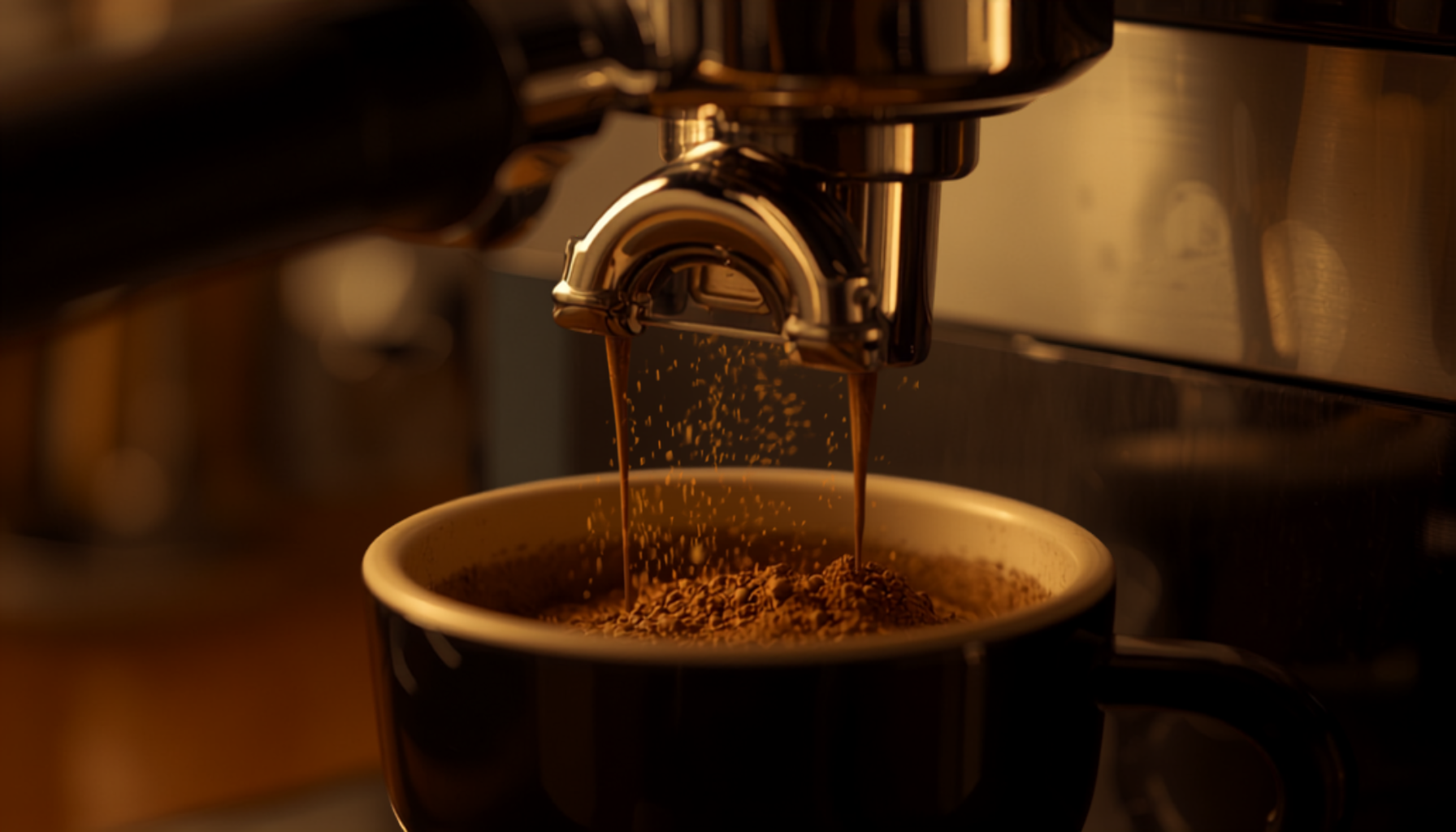
The Sage Barista Express is one of the most popular home espresso machines in the UK, largely because it combines a built-in grinder with a genuinely capable espresso machine in one relatively compact unit. Getting consistently good results from it, though, still comes down to understanding how to dial it in properly, since no single grind setting works for every bean or every user. This guide walks through how to approach dialling in a Sage Barista Express, step by step, without relying on invented or one-size-fits-all numbers.
The quick answer
Dialling in a Sage Barista Express means adjusting the machine's built-in grinder dial, your dose, and your shot timing until a specific bag of beans extracts in a balanced 25–30 second window at a roughly 1:2 dose-to-yield ratio. Start with your grinder's suggested espresso range, weigh your dose, pull a shot, and adjust the grind dial in small increments based on timing and taste. Grind numbers vary by bean, freshness and environment, so treat any specific setting as a rough starting point rather than a fixed answer.
Why the Barista Express Needs Its Own Dial-In Process
The Barista Express's built-in conical burr grinder gives you genuine control over grind size, which is a real advantage over machines without integrated grinding, but it also means the responsibility for dialling in sits with you rather than being fixed by a manufacturer setting. Every new bag of beans, and sometimes the same bag as it ages, behaves slightly differently at an identical grinder setting, because roast level, bean density, freshness and even ambient humidity all affect how water flows through the puck. This is exactly the same core process covered in our general guide to dialling in a grinder, applied specifically to this machine.
Understanding the Barista Express's Grind Dial
The Barista Express uses a numbered dial to adjust grind size, typically covering a range from coarse settings suited to other brewing methods through to the fine settings needed for espresso. It's worth stressing that these numbers are specific to your individual machine and burr set — they are not a universal standard, so a setting that works well for someone else's machine, or even a different bag of beans on your own machine, is only ever a rough starting point rather than a reliable target. Treat the numbers as a relative reference for your own adjustments, not an absolute value to copy from elsewhere.
Setting Your Dose
Weigh your dose using a set of kitchen or coffee scales rather than estimating by eye, since an inconsistent dose makes it far harder to tell whether a disappointing shot is a dosing problem or a grind problem. The Barista Express typically ships with single and double-wall baskets designed around specific dose ranges, so check which basket you're using and aim to fill it appropriately rather than significantly over- or under-filling it, which can produce inconsistent results regardless of grind size.
Starting Your Grind Setting
Begin with a grind setting somewhere in the machine's suggested espresso range, or a texture noticeably finer than table salt if you're starting from scratch with a new bean. This is a starting point rather than a final answer, and the actual right number for your specific beans will only reveal itself once you've pulled a shot and evaluated it against timing and taste. Resist the temptation to search for someone else's "correct" numbered setting, since grinder calibration varies even between individual units of the same model.
Timing and Evaluating Your First Shot
Start your timer the moment water first touches the coffee, and aim for a shot that reaches roughly double its dry dose weight in liquid yield within about 25–30 seconds, the same benchmark covered in our guide to espresso extraction. A shot finishing well under this window, often tasting sour or thin, suggests your grind needs to go finer. A shot finishing well over this window, often tasting bitter or harsh, suggests your grind needs to go coarser.
Adjusting the Grind Dial Step by Step
Make small adjustments to the grind dial, one or two increments at a time, re-grinding and pulling a fresh shot after each change rather than making large jumps. If your first shot pours too quickly and tastes sour, move to a slightly finer setting and re-test. If it pours too slowly and tastes bitter, move to a slightly coarser setting and re-test. This loop — adjust, grind, pull, taste — is the entire dial-in process, repeated until the shot tastes balanced within your target time window.
Why Grind Numbers Vary by Bean, Freshness and Environment
It's worth being explicit about why no fixed number can be given here: different beans have different densities and roast levels, which change how they grind and how quickly water passes through the resulting grounds. Freshly roasted beans, particularly within the first few days, release trapped carbon dioxide gas that can affect flow and crema in ways that settle down as the beans rest. Humidity and ambient temperature can also subtly shift how ground coffee behaves on a given day, even with identical beans and settings. This is precisely why the same grind number can perform differently from one week to the next, and why treating the dial-in process as an ongoing habit, rather than a one-time setup, gets the most consistent results from a Barista Express.
Common Barista Express Dial-In Mistakes
The most common mistake is changing grind size and dose simultaneously, which makes it impossible to know which change actually caused the difference in your next shot. Another is making large, dramatic adjustments to the grind dial rather than small, incremental ones, which tends to overshoot from one extreme to the other. A third is dialling in with beans that are unusually fresh or noticeably stale, both of which can behave inconsistently regardless of an otherwise correct grind setting.
Puck Preparation on the Barista Express
Distribute your ground coffee evenly in the portafilter basket before tamping, since an uneven distribution can cause channelling — water forcing a path through weak spots in the puck — that undermines an otherwise well-dialled-in grind setting. Tamp level and firmly rather than at an angle, since an angled tamp is a common, easily overlooked cause of a shot pouring unevenly on one side of the portafilter.
Maintaining Your Barista Express for Consistent Results
Regular cleaning of the group head, portafilter and steam wand, alongside descaling appropriate to your water hardness, keeps a Barista Express performing consistently over time. A machine that's gradually slowing down or producing inconsistent shots despite no changes to your beans or grind setting is worth checking for maintenance issues before assuming your dial-in technique has gone wrong. Our guide to cleaning and maintaining your Sage machine covers this in more depth.
Which Amici Coffee Is Good for Learning to Dial In a Barista Express?
Our Amici House Roast, with its smooth, chocolatey, lower-acidity profile, is a genuinely forgiving coffee to practise dialling in with, since it tends to taste reasonably good across a slightly wider grind range than brighter, more delicate single origins. Once you're comfortable with the process on this machine, our full buying guide can help you choose your next bean to dial in.
Best Coffee Beans for Your Sage Machine
Since the Barista Express is built around a whole-bean grinder, choosing genuinely fresh whole beans makes a bigger difference to your results than almost any other factor. Our guide to the best coffee beans for Sage machines covers this in more detail, including how freshness, roast level and origin all interact with a built-in grinder.
Keep Fresh Coffee Coming
Since freshness affects dial-in so directly, particularly on a machine with a built-in grinder, keeping a steady supply of recently roasted beans makes the whole process easier and more predictable. Our coffee subscription lets you choose your beans, your grind and your delivery frequency, so fresh coffee keeps arriving exactly when you need it.
Why Choose Amici Coffee?
Amici Coffee is an independent UK coffee business with six carefully selected single origin coffees, each with clear origin and tasting information rather than vague blend descriptions. Beans are roasted in partnership with a certified B Corp speciality coffee roasting partner that holds the highest B Corp score of any coffee roaster we work with — a genuinely world-leading, global leader in ethical coffee roasting. You can order online for delivery, visit our café in person, or set up a subscription so your coffee never runs out.
Frequently Asked Questions
What grind setting should I use on a Sage Barista Express?
There's no universal number, since grinder calibration varies by machine, bean and freshness. Start within the suggested espresso range and adjust based on timing and taste.
How long should a shot take to pour on a Barista Express?
Around 25–30 seconds for a roughly 1:2 dose-to-yield ratio is a common starting benchmark, adjustable to your own taste from there.
Why does my Barista Express need re-dialling with every new bag?
Different beans have different roast levels, densities and freshness, all of which affect how they grind and extract, even at an identical dial setting.
Should I change grind size or dose first when dialling in?
Grind size is usually the primary lever, since it directly controls flow rate. Adjust dose separately and one variable at a time.
Why is my espresso inconsistent even with the same settings?
Bean freshness, humidity and small inconsistencies in dose or tamping can all shift results slightly, particularly early in a bag's life.
Does the Barista Express need regular maintenance to stay consistent?
Yes. Regular cleaning and appropriate descaling prevent gradual performance decline that can otherwise be mistaken for a dial-in problem.
How often should I re-dial in my Barista Express?
Whenever you open a new bag of beans, and sometimes partway through a bag as the beans age, since both roast and freshness affect extraction.
The Bottom Line
Dialling in a Sage Barista Express isn't about finding one magic number — it's a repeatable process of adjusting grind, dose and timing based on how each specific bag of beans actually performs. Treat every new bag as its own quick dial-in, make small adjustments, and taste as you go, and you'll get consistently good results from this machine.
Explore Amici's range of single origin coffees, or set up a regular delivery so fresh coffee keeps arriving.
Got the machine — now get the coffee
Great equipment deserves great beans. Shop our freshly roasted single origins and subscribe to save 10% on every order.
Shop Coffee & Subscribe
Share:
Sage Investment Worth It
The Best Sage Coffee Machine For Your Home