

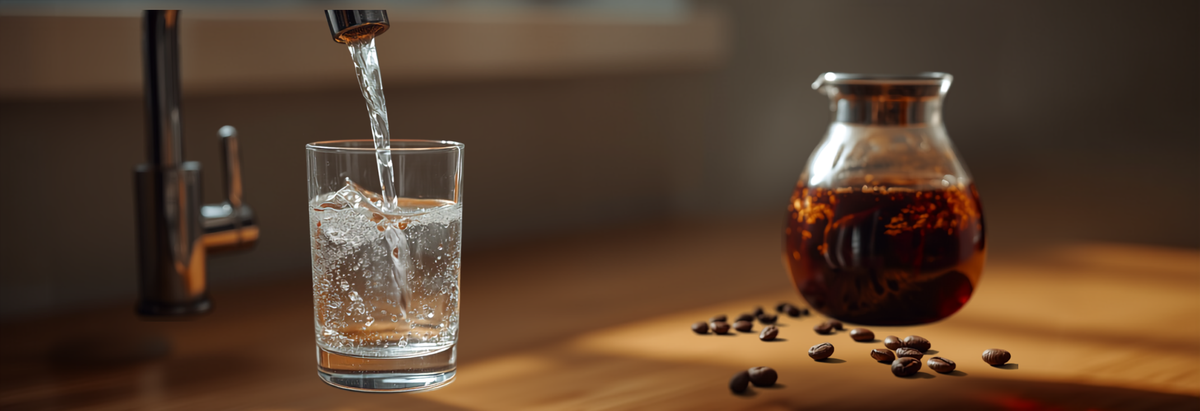
Coffee is roughly 98% water, yet it's one of the most overlooked variables in home brewing. If you've dialled in your beans, grind and brew method but still feel like something's missing, your water might be the culprit. Here's why it matters, and what to do about it.
The quick answer
Yes — water quality has a major, well-documented effect on coffee taste. Minerals in water (particularly calcium and magnesium) actually help extract flavour from coffee grounds, so water that's too soft can produce a flat, underwhelming cup, while water that's too hard can taste chalky, cause excessive limescale buildup, and mute certain flavours. Very hard tap water or heavily chlorinated water can introduce off-flavours entirely unrelated to the coffee itself.
Why Minerals Actually Help Extraction
It might seem counterintuitive, but coffee needs some dissolved minerals in water to extract properly — pure distilled water, with virtually no mineral content, tends to produce flat, underwhelming coffee because there's nothing for flavour compounds to bind to during extraction. This is why "pure" water isn't actually the goal; balanced mineral content is.
Too Hard vs Too Soft: Finding the Balance
Water that's too hard (high in dissolved minerals) can lead to over-extraction of certain compounds, a chalky or mineral-heavy taste, and significantly faster limescale buildup in your machine (see our cleaning and descaling guide). Water that's too soft, on the other hand, often produces a flat, one-dimensional cup lacking the brightness and complexity that balanced minerals help bring out.
Chlorine and Other Tap Water Off-Flavours
Beyond mineral content, tap water can carry chlorine or other treatment byproducts that introduce noticeable off-flavours, especially in more delicate light-roast coffees where subtle flavour notes are easily masked. If your tap water smells or tastes noticeably of chlorine on its own, it will very likely affect your coffee too.
Should You Use Filtered Water?
For most home brewers, a simple water filter (jug-style, tap-mounted, or built into your machine) is enough to remove chlorine and soften overly hard water without stripping out all the minerals that help extraction. This is usually the easiest, most cost-effective way to noticeably improve coffee flavour if your local tap water is a known issue.
Should You Use Bottled or Specialty Coffee Water?
Specialty "coffee water" products, formulated with a specific mineral balance for brewing, can produce genuinely excellent results and are popular among serious home brewers and competition baristas. They're not necessary for everyday brewing, but worth trying if you want to experiment with dialling in your water precisely, especially if you already suspect your tap water is holding your coffee back.
Common Misunderstandings
A common myth is that using distilled or pure water always improves coffee — in reality, water with zero mineral content often makes coffee taste flat, since minerals are part of what helps flavour extraction happen properly. Another myth is that all tap water is equally suitable — hardness and treatment chemicals vary hugely by region, so what works well in one area may need filtering in another.
Why Choose Amici Coffee?
Amici Coffee is an independent UK coffee business with six carefully selected coffees, each with clear origin and tasting information rather than vague blend descriptions. Beans are roasted in partnership with a certified B Corp speciality coffee roasting partner that holds the highest B Corp score of any coffee roaster we work with — a genuinely world-leading, global leader in ethical coffee roasting. You can order online for delivery, visit our café in person, or set up a subscription so your coffee never runs out.
Frequently Asked Questions
Does water really make a difference to coffee taste?
Yes — since coffee is roughly 98% water, its mineral content and any off-flavours significantly affect the final cup.
Is distilled water best for brewing coffee?
No — distilled water lacks the minerals needed for proper extraction, often producing flat, underwhelming coffee.
What does hard water do to coffee?
It can produce a chalky, mineral-heavy taste and cause faster limescale buildup in your machine.
Should I filter my tap water for coffee?
If your tap water is very hard or has a noticeable chlorine taste, filtering usually improves flavour and reduces machine maintenance.
Do I need special "coffee water" to brew well?
No, but it can help if you want to fine-tune your water's mineral balance precisely, especially for serious home brewing.
The Bottom Line
Water is one of the most overlooked variables in home coffee — getting the balance right, neither too hard nor too soft, and filtering out off-flavours can make a genuinely noticeable difference to your cup.
Explore Amici's speciality coffees and find a cup that suits your taste, or set up a regular delivery so fresh coffee keeps arriving.
Share:
How to Make Good Coffee Without a Machine
Costa Rican Coffee Explained