

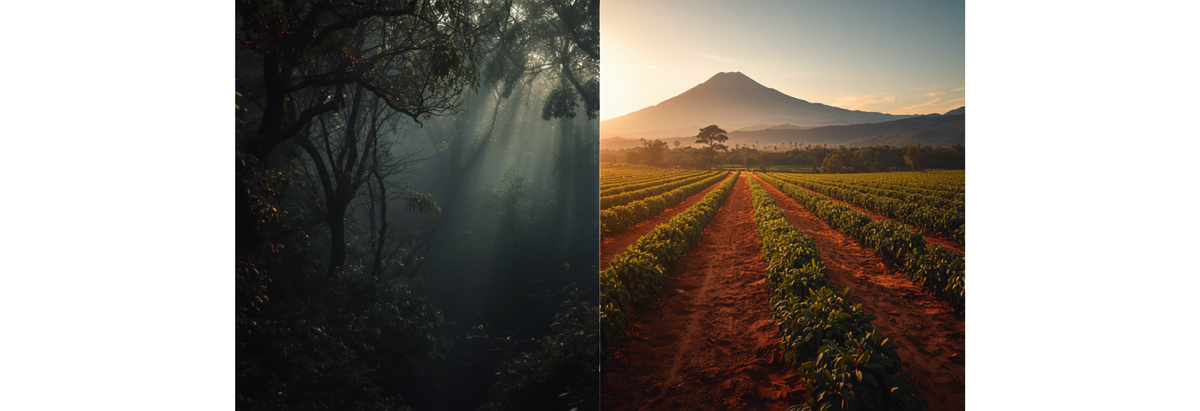
Ethiopia and Kenya sit right next to each other on the map, yet their coffees taste like they come from different worlds. Both are East African icons prized by specialty roasters, but for very different reasons. Here's how to tell them apart — and why the difference matters.
The quick answer
Ethiopian coffee tends toward floral, tea-like and intensely fruity flavours — think jasmine, bergamot and blueberry — driven by its unmatched diversity of native heirloom varieties. Kenyan coffee, by contrast, is prized for a vivid, almost savoury acidity, often described as blackcurrant or tomato-like, thanks to signature varieties like SL28 and SL34 and a rigorous grading and auction system. Both are washed-coffee powerhouses, but they arrive at very different cups.
Different Varieties, Different Starting Points
Much of the difference starts in the plant itself. Ethiopia's coffee grew wild for centuries before cultivation, producing an enormous range of uncatalogued "heirloom" varieties. Kenya's signature character, meanwhile, comes largely from a small number of deliberately bred varieties — SL28 and SL34 — selected in the 1930s specifically for drought resistance and cup quality. Neither approach is "better"; they're simply different paths to distinctiveness.
Flavour Profile: Floral and Fruity vs Bright and Savoury
Ethiopian coffee, especially washed lots from Yirgacheffe, tends toward delicate floral and citrus notes, while naturally processed Ethiopian coffee can show intense blueberry or strawberry character. Kenyan coffee takes a different direction entirely: a vivid, wine-like acidity with blackcurrant, tomato or tamarind notes, and a fuller body. If Ethiopian coffee is often described as elegant and perfumed, Kenyan coffee is usually described as punchy and structured.
Processing: Washed Dominates, But Ethiopia Adds Natural
Both origins are predominantly washed (see our washed vs natural guide), which is part of why both are known for clean, bright cups rather than heavy, earthy ones. Ethiopia is unusual, though, in also producing a huge volume of naturally processed coffee — particularly from Harrar — giving it a wider stylistic range than Kenya, where washed processing (often with a distinctive double fermentation) is close to universal.
Growing Conditions: High Altitude, Volcanic Soil, Different Terrain
Both countries grow coffee at high altitude in volcanic soil, which is a major reason both produce structured, complex coffee rather than flat, simple cups (our altitude guide explains why). Ethiopian coffee often grows semi-wild under forest canopy, especially in the south, while Kenyan coffee is more commonly grown on smallholder plots and larger estates around the central highlands near Mount Kenya.
Grading and Trading: Two Very Different Systems
Kenya is known for one of the coffee world's most rigorous systems: size-based grading (AA, AB, and so on) combined with a centralised auction where lots are cupped and sold based on genuine quality assessment. Ethiopia's system has historically been less centralised, though direct trade and increased traceability to specific washing stations and even individual farms have grown significantly in recent years, helping buyers pinpoint quality more precisely than in the past.
Which Should You Try First?
If you enjoy tea, florals or bright fruit-forward flavours, start with an Ethiopian coffee, ideally a washed Yirgacheffe. If you prefer a bolder, wine-like, almost savoury cup, Kenyan coffee is the more dramatic introduction. Neither is an "easier" starting point than the other — they simply represent two of the most distinctive flavour directions in the entire coffee world.
Common Misunderstandings
A common myth is that because they're neighbouring East African countries, Ethiopian and Kenyan coffee taste similar — in reality, they're often used as textbook examples of two opposite ends of the specialty flavour spectrum. Another myth is that Kenyan coffee's blackcurrant note comes from added flavouring — it's a naturally occurring characteristic of the variety, terroir and processing, not a flavoured product.
Does Amici Stock Ethiopian or Kenyan Coffee?
Not currently — our range focuses on six carefully selected coffees from Brazil, Colombia, Peru, Guatemala and Uganda. If you're drawn to Ethiopia's bright, fruity character, our washed Colombian Single Origin offers a similarly lively, clean cup. If Kenya's bold acidity appeals more, our washed Ugandan Single Origin, also grown at high altitude in East Africa, offers a comparable regional structure, albeit with its own toffee and milk chocolate character.
Why Choose Amici Coffee?
Amici Coffee is an independent UK coffee business with six carefully selected coffees, each with clear origin and tasting information rather than vague blend descriptions. Beans are roasted in partnership with a certified B Corp speciality coffee roasting partner that holds the highest B Corp score of any coffee roaster we work with — a genuinely world-leading, global leader in ethical coffee roasting. You can order online for delivery, visit our café in person, or set up a subscription so your coffee never runs out.
Frequently Asked Questions
What's the main flavour difference between Ethiopian and Kenyan coffee?
Ethiopian coffee tends toward floral, tea-like and fruity notes, while Kenyan coffee is known for vivid, blackcurrant-like acidity and a fuller body.
Are Ethiopian and Kenyan coffee grown the same way?
Both grow at high altitude in volcanic soil, but Ethiopia relies on genetically diverse heirloom varieties while Kenya relies on specific bred varieties like SL28 and SL34.
Which is more acidic, Ethiopian or Kenyan coffee?
Kenyan coffee is generally considered to have more vivid, pronounced acidity, though high-quality washed Ethiopian coffee is also bright and lively.
Do both countries mainly produce washed coffee?
Yes, though Ethiopia also produces a significant amount of naturally processed coffee, giving it a wider stylistic range than Kenya.
Does Amici sell Ethiopian or Kenyan coffee?
Not currently, but our Colombian and Ugandan Single Origins offer comparable bright or structured profiles respectively.
The Bottom Line
Ethiopian and Kenyan coffee showcase two of the most distinctive flavour directions in the entire coffee world — one floral and fruity, one bold and vivid — proving that neighbouring origins can taste worlds apart.
Explore Amici's speciality coffees and find a cup that suits your taste, or set up a regular delivery so fresh coffee keeps arriving.
Share:
How to Make Good Coffee Without a Machine
Costa Rican Coffee Explained