

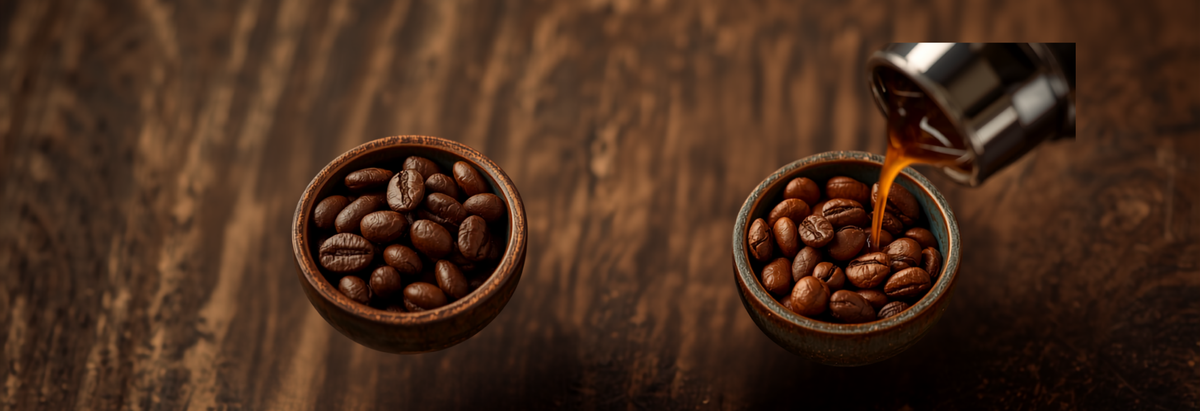
Walk into most supermarkets and you'll see bags labelled "coffee beans" next to others labelled "espresso beans", as if they're two different agricultural products. They're not — but there are real differences worth understanding before you pick a bag for your machine.
The quick answer
"Espresso beans" and "coffee beans" almost always come from the exact same coffee plant species — there's no separate botanical category of "espresso bean". The difference is usually in roast level and how the coffee has been blended and roasted to suit espresso brewing specifically: typically a slightly darker roast, sometimes a blend designed to produce good crema and balance under high pressure. You can technically make espresso with any roasted coffee bean, and brew filter coffee with beans labelled "espresso" — the labelling is a guide to intended use, not a hard rule.
There's No Separate "Espresso Plant"
Coffee beans are the seeds of the coffee cherry, and whether a bag ends up labelled "espresso" or "filter/coffee" has nothing to do with a different underlying plant variety in most cases — it's entirely about how that bean has been roasted and blended afterwards. A single batch of green coffee beans could, in principle, be roasted one way and sold as "espresso" or roasted another way and sold as "filter coffee".
Roast Level: The Biggest Practical Difference
Beans labelled for espresso are typically roasted slightly darker than those intended for filter or pour-over brewing. A darker roast produces more surface oils and a fuller body, which tends to suit espresso's short, pressurised, concentrated extraction — helping produce the rich crema and bold flavour espresso is known for. Lighter roasts, more common for filter coffee, preserve more of the bean's original bright acidity, which shows through better in a slower, less concentrated brewing method.
Blending for Consistency and Crema
Many "espresso" labelled coffees are blends of multiple origins, specifically composed to produce a consistent, balanced result under the high pressure and short extraction time of espresso brewing — good crema, body and a balance of sweetness and acidity. Single-origin coffees can absolutely be used for espresso too (and often are, in specialty coffee), but a well-designed espresso blend is engineered specifically to perform predictably in that brewing method.
Can You Use "Coffee Beans" for Espresso?
Yes, absolutely. Any roasted coffee bean can be ground finely and brewed as espresso — a lighter roast filter coffee used for espresso will simply produce a brighter, more acidic, less traditionally "espresso-like" shot than a darker espresso-labelled blend would. Many specialty coffee shops deliberately serve single-origin, lighter-roast coffees as espresso specifically to showcase brighter, more distinctive flavours than a classic dark espresso blend offers.
Can You Use "Espresso Beans" for Filter Coffee?
Yes, equally — beans labelled for espresso will simply produce a bolder, heavier-bodied filter coffee than a lighter roast would, since darker roasts generally taste fuller and less acidic regardless of brewing method. It won't damage your filter machine or taste "wrong", just noticeably different in character from a lighter roast.
Does Grind Size Matter More Than the Bean Label?
In practice, yes — grind size has a bigger day-to-day impact on your results than whether a bag says "espresso" or "coffee beans". Espresso needs a fine, consistent grind to create the resistance necessary for proper pressurised extraction, while filter and cafetière methods need progressively coarser grinds. Using the right grind size for your brewing method matters more than chasing a specific bean label.
Common Misunderstandings
A common myth is that espresso beans are a fundamentally different, more "concentrated" bean — in reality, espresso is a brewing method (fine grind, high pressure, short extraction), not a bean type, and the same beans can be used for espresso or filter coffee with different results. Another myth is that dark roast automatically means "espresso roast" and is required for good espresso — plenty of excellent espresso is made from medium or even light roast beans, particularly in specialty coffee shops.
How to Choose Beans for Your Brewing Method
If you're brewing espresso and want a classic, bold, chocolatey profile with good crema, look for a medium-dark roast, potentially a blend designed for espresso. If you want brighter, more distinctive flavours in your espresso, don't be afraid to use a lighter roast single origin instead. For filter or pour-over, a lighter-to-medium roast generally shows off more nuance and acidity, though there's no rule stopping you from using a darker roast if you prefer a bolder filter cup.
Our Amici Recommendation
Our Amici House Roast works beautifully as a bold, full-bodied espresso, with rich hazelnut, mango and milk chocolate notes that hold up well against steamed milk. If you'd rather explore a brighter, more distinctive espresso shot, try our Guatemalan Single Origin — a washed coffee that makes an unusually clean, structured espresso for those who enjoy more clarity in their cup.
Why Choose Amici Coffee?
Amici Coffee is an independent UK coffee business with six carefully selected coffees, each with clear origin and tasting information rather than vague blend descriptions. Beans are roasted in partnership with a certified B Corp speciality coffee roasting partner that holds the highest B Corp score of any coffee roaster we work with — a genuinely world-leading, global leader in ethical coffee roasting. You can order online for delivery, visit our café in person, or set up a subscription so your coffee never runs out.
Frequently Asked Questions
Are espresso beans a different plant species from regular coffee beans?
No. They almost always come from the same coffee species — the difference is in roast level and blending, not the underlying plant.
Can I use regular coffee beans in my espresso machine?
Yes. You'll just get a different flavour profile — typically brighter and lighter-bodied than a traditional dark espresso blend.
Do espresso beans have more caffeine than regular coffee beans?
Not inherently. Caffeine content depends more on bean species and serving size than on roast level or "espresso" labelling.
Why are espresso beans usually darker roasted?
A darker roast tends to produce more surface oils and body, which suits espresso's short, high-pressure extraction and helps build good crema.
Does grind size matter more than the bean label?
Yes, in practical terms — using the correct grind size for your brewing method has a bigger impact on your result than whether the bag says "espresso" or "coffee beans".
The Bottom Line
"Espresso beans" and "coffee beans" are the same underlying product, roasted and sometimes blended differently to suit different brewing methods — not two separate categories of bean. Feel free to use whichever roast you enjoy with whichever brewing method you have on hand.
Explore Amici's speciality coffees and find a cup that suits your taste, or set up a regular delivery so fresh coffee keeps arriving.
Share:
Kenyan Coffee Explained: Why It's Prized by Roasters
How to Read a Coffee Bag Label